Tenryū-ji Audio Guide

Audio guide for Tenryū-ji

Tenryū-ji
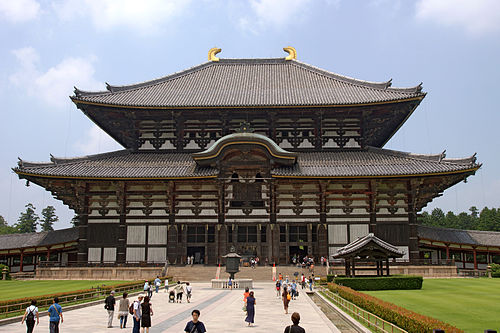
Photo by osakaosakaWikimedia CommonsCC BY-SA 3.0

7 min of listening · Section 1 of 5: Welcome to Tenryū Temple

Prefer reading? The full guide is below

Here in person? Walk on with Mappu

This audio guide tells one place’s story. Walk Mode keeps going as you walk:

  • It knows where you are and talks about what’s in front of you, not only these chapters.
  • It takes you on to the next sight and follows what interests you.
  • Ask about anything you see, and it answers on the spot.
  • Your phone stays in your pocket.

A 2-hour live walk with Mappu, €4.99.

50 credits from the Starter pack. One-time purchase, no subscription.

Self-guided audio walk. No guide accompanies you. Not affiliated with the sites.

Keep exploring

Discover more places in Mappu.

Tenryū-ji • Section 1 of 5

Tenryū-ji: is there a free audio guide?

Quick answer. Yes. Mappu’s Tenryū-ji audio guide (Kyoto, Japan) is free in your browser: 5 sections and about 7 minutes of listening, in 8 languages. It covers “Tenryū Temple: A Shogun's Gesture to a Rival Emperor”, “Tenryū Temple: The Trading Ship That Paid the Bills” and “Tenryū Temple: Fire, Rebuilding and a Shrinking Estate”. In the Mappu app, Walk Mode narrates the places around you as you move and answers your follow-up questions.

Tenryū-ji map

Mappu's own map of the place, with the paths and entrances OpenStreetMap shows around it.

Tenryū-ji mapThe place on the map, with the guide's point marked.

Tenryū-ji: what does the audio guide cover?

  1. 01

    Welcome to Tenryū Temple

    Welcome to Tenryū Temple, written 天龍寺 in Japanese, in the Sagano and Arashiyama district of Kyoto's Ukyō Ward. You are in the neighborhood called Susukinobaba-chō, a name that suggests pampas grass and an old riding ground. This is the head temple of the Tenryū-ji branch of the Rinzai school of Zen Buddhism, and it has long been counted among the most important Zen temples in Kyoto. The story here begins with a rivalry and a funeral wish. The temple was founded in 1339 by the warlord Ashikaga Takauji, and its first chief priest was the Zen master Musō Soseki. Its main object of worship is the Buddha Shakyamuni with two attendants. Since 1994 it has been part of the UNESCO World Heritage listing called Historic Monuments of Ancient Kyoto. Over the next few minutes we will look at why a shogun built a temple for a defeated rival, how that temple paid for itself with a trading ship, what the garden by Musō Soseki still preserves, and how fire and imperial decree reshaped the grounds you see today. Settle in, and let's begin.

  2. 02

    Tenryū Temple: A Shogun's Gesture to a Rival Emperor

    Picture Japan in a time of split loyalties. Ashikaga Takauji had been in conflict with Emperor Go-Daigo, and when Go-Daigo died, it was the Zen monk Musō Soseki who strongly urged Takauji to build a temple to pray for the late emperor's peace in the afterlife. Musō was respected even by the warrior class, so his advice carried real weight. Takauji turned to Retired Emperor Kōgon of the rival Northern Court and asked for his sanction. With that decree, Kameyama-den, a detached palace that had belonged to the Southern Court, was remodeled into a great temple with Musō as its founding abbot. The temple's dedication ceremony took place in 1345, on the seventh anniversary of Go-Daigo's death. The land itself already had a long past. Here once stood Danrin-ji, a Zen temple founded by Tachibana no Kachiko, the empress of Emperor Saga, remembered as the Danrin Empress. After that temple faded away, Retired Emperor Go-Saga built a residence here, and later Retired Emperor Kameyama set up a temporary palace. Tenryū Temple was layered onto a site that emperors had already treasured.

  3. 03

    Tenryū Temple: The Trading Ship That Paid the Bills

    Building a temple of this scale was expensive. Takauji and Retired Emperor Kōgon donated estates to support the construction, but it still was not enough. So Takauji's brother Tadayoshi consulted Musō and came up with a bold plan: reopen trade with Yuan China, which had been cut off since the Mongol invasions, and use the profits to fund the building work. That is the origin of the Tenryū-ji ship, a trading vessel named after the temple. It is a wonderful reminder that a Zen temple, a place we now associate with stillness, was once tied to overseas commerce and politics. The temple's standing grew quickly. In 1346, Musō chose 10 spots in and around the grounds as places of special beauty, known as the Ten Views of Tenryū-ji, and wrote poems for them. They include the Sōgen Pond, the Togetsu Bridge, and the Ryūmon Pavilion. Then in 1386, under Ashikaga Yoshimitsu, the Five Mountains of Kyoto and of Kamakura were formally reorganized, and Tenryū Temple was placed first among the Kyoto Five.

  4. 04

    Tenryū Temple: Fire, Rebuilding and a Shrinking Estate

    Here is a surprising fact for a temple this famous: none of its original buildings survive. Since its founding, Tenryū Temple has suffered eight great fires, starting in 1358 and continuing until the Hamaguri Gate Incident of 1864. Each time the halls were rebuilt, thanks to the efforts of successive abbots, so the temple you visit is the product of repeated renewal. The estate was once vast. At its height, the grounds were said to hold some 150 sub-temples and reached as far as the present-day Katabira-no-Tsuji station on the Keifuku Railway. Even famous scenery such as Arashiyama, the Togetsu Bridge and Kameyama Park, to the west of the temple, once belonged to the temple precinct. In 1876, the temple became the head temple of the Tenryū-ji branch of Rinzai Zen. But the government's land confiscation order took away nearly all of Mount Kameyama and the flat lands of Saga, a block of about 4 kilometers on each side. Today the grounds are about one tenth of what they once were, roughly 30,000 tsubo, the traditional Japanese land unit.

  5. 05

    Before You Head Off

    As you wander, remember that the heart of the temple is the Sōgen Pond Garden, designed by Musō Soseki. It is said to preserve the look it had when the temple was founded, and it was the first garden in Japan to be designated a Special Place of Scenic Beauty. Notice how the pond, the stones and the hills beyond are arranged as one scene. It is also worth remembering that the temple remains a place of Zen practice and meditation, not only a monument. The temple runs its own vegetarian restaurant, called Shigetsu, where you can taste Zen cooking among the seasonal views, and the temple's official pages also introduce its cloud dragon painting. If you are arriving by train, the Sagaarashiyama station on the JR Sagano line is about 16 minutes from Kyoto station, or about 11 by rapid service, followed by roughly a 13 minute walk to the temple. And once you have seen the garden, look beyond the walls toward Arashiyama and the river. That whole landscape was once part of this temple's story, and it invites you to keep exploring.

About this guide

AI-generated from 6 sources; checked automatically and last updated on October 31, 2026. Verify tickets and opening hours on the official site. Independent guide by Mappu. Not affiliated with or endorsed by the site or its managers.

Run a travel site or blog? Embed this audio guide for free.

Walk on from here

This place is stop 4 of 5 of a self-guided walk: Arashiyama Bamboo Grove to Togetsukyo, Kyoto. About 2.0 km and 25 minutes on foot, plus about 32 minutes of listening.

Route map: walking on from Tenryū-ji5 numbered stops in walking order. Stop 1: Arashiyama Bamboo Grove; Stop 2: Ōkōchi Sansō; Stop 3: Nonomiya Shrine; Stop 4: Tenryū-ji; Stop 5: Togetsu Bridge.Stop 1: Arashiyama Bamboo Grove1Stop 2: Ōkōchi Sansō2Stop 3: Nonomiya Shrine3Stop 4: Tenryū-ji4Stop 5: Togetsu Bridge5
Distances are estimates along the walking route, from OpenStreetMap.

Indicative route. While you walk, watch where you're going, mind the traffic and follow local signs and rules. The map is an aid, not a safety guide. Terms

  1. Arashiyama Bamboo Grove

    about 0.2 km · about 3 min on foot

  2. Ōkōchi Sansō

    about 0.5 km · about 7 min on foot

  3. Nonomiya Shrine

    about 0.6 km · about 8 min on foot

  4. Tenryū-jiThis guide

    about 0.7 km · about 9 min on foot

  5. Togetsu Bridge
Photo attribution

Walk Mode, in the free Mappu app: 2 hours for 50 credits (€4.99 Starter pack)

See the whole walk

Planning a trip to Kyoto?

Get your plan

Mappu sketches your days free in the chat, no account needed. Then take the full plan with you:

  • Weekend trip, €9.99: Your day-by-day plan plus 2 live walks
  • Save your trip’s free guides on your phone in the Mappu app: they play with no signal
See the trip packs

Already going? The 2-hour live walk in Kyoto is €4.99

Plan your trip on a map and get an audio guide for almost any place nearby: just tap it on the Mappu map.

Common questions

Tenryū-ji: how long is the free audio guide?

About 7 minutes of listening in 5 sections: “Welcome to Tenryū Temple”, “Tenryū Temple: A Shogun's Gesture to a Rival Emperor”, “Tenryū Temple: The Trading Ship That Paid the Bills”, “Tenryū Temple: Fire, Rebuilding and a Shrinking Estate”, and “Before You Head Off”.

Tenryū-ji: what can I ask Mappu after the guide?

You can ask follow-up questions such as “Why did Musō Soseki urge Ashikaga Takauji to build a temple for Emperor Go-Daigo, and how did the old Kameyama palace become Tenryū Temple?” and keep asking in Mappu, with the guide connected to your map and trip plan.