Daikaku-ji Audio Guide

Audio guide for Daikaku-ji

Daikaku-ji
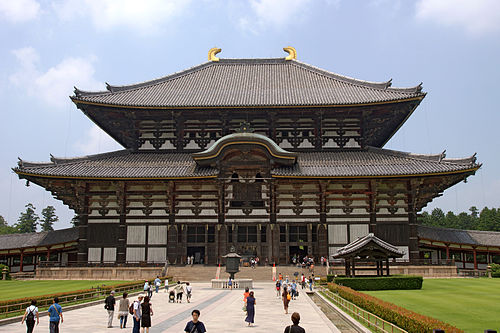
Photo by PlusMinusWikimedia CommonsCC BY-SA 3.0

6 min of listening · Section 1 of 5: Welcome to Daikaku-ji Temple

Prefer reading? The full guide is below

Here in person? Walk on with Mappu

This audio guide tells one place’s story. Walk Mode keeps going as you walk:

  • It knows where you are and talks about what’s in front of you, not only these chapters.
  • It takes you on to the next sight and follows what interests you.
  • Ask about anything you see, and it answers on the spot.
  • Your phone stays in your pocket.

A 2-hour live walk with Mappu, €4.99.

50 credits from the Starter pack. One-time purchase, no subscription.

Self-guided audio walk. No guide accompanies you. Not affiliated with the sites.

Keep exploring

Discover more places in Mappu.

Daikaku-ji • Section 1 of 5

Daikaku-ji: is there a free audio guide?

Quick answer. Yes. Mappu’s Daikaku-ji audio guide (Kyoto, Japan) is free in your browser: 5 sections and about 6 minutes of listening, in 8 languages. It covers “An Emperor's Retreat Becomes Daikaku-ji Temple”, “Halls and Painted Doors at Daikaku-ji Temple” and “The Ancient Pond and Flowers of Daikaku-ji Temple”. In the Mappu app, Walk Mode narrates the places around you as you move and answers your follow-up questions.

Daikaku-ji map

Mappu's own map of the place, with the paths and entrances OpenStreetMap shows around it.

Daikaku-ji mapThe place on the map, with the guide's point marked.

Daikaku-ji: what does the audio guide cover?

  1. 01

    Welcome to Daikaku-ji Temple

    Welcome to Daikaku-ji Temple, written 大覚寺 in Japanese. It sits in Ukyō Ward, in the western part of Kyoto, in the quiet corner of Saga that Kyoto people call deep Saga. This is a Shingon Buddhist temple, but it began as something quite different: a residence of Emperor Saga, who lived from 785 to 842. That origin explains the feel of the place. Many Kyoto temples grew from monastic halls. Daikaku-ji Temple grew from an imperial retreat, and later emperors even conducted their cloistered rule from here, governing after stepping down from the throne. The temple is often described as having a history of about 1200 years, and its halls still carry the air of a palace rather than a fortress of faith. Over the next few stops, we will look at the emperor who started it all, the halls and paintings that give the temple its courtly look, and the ancient artificial lake that still anchors the grounds. Along the way you will also meet a living art form, the flower arranging of the Saga Go-ryū school, which has its headquarters here.

  2. 02

    An Emperor's Retreat Becomes Daikaku-ji Temple

    Picture the early Heian period, when Kyoto was still a young capital. Emperor Saga chose this western edge of the city for a villa, a detached palace set apart from the formality of court life. That villa is the seed of Daikaku-ji Temple. It is also tied to the great monk Kūkai, known as Kōbō Daishi, who is said to have performed Buddhist rites here, which gave the site its deep religious pedigree. The villa did not become a temple overnight. It was later converted into one, and its founding priest is remembered as Kōjaku, an imperial prince who entered the Buddhist path. That royal link ran on for centuries. This is what Japanese tradition calls a monzeki temple, a temple whose head was traditionally a member of the imperial family or the high nobility. Emperors who had retired used the place as a base for cloistered rule, steering politics from behind the scenes. So when you walk these grounds, you are walking through a place where a retired emperor might once have received advisers, rather than a place built only for quiet prayer. The mountain name of the temple is Sagasan, a nod to the Saga district that gave the emperor and the temple their name.

  3. 03

    Halls and Painted Doors at Daikaku-ji Temple

    The buildings here have a remarkable pedigree of their own. The hondō, the main hall, and the Founder's Hall were moved here from the Kyoto Imperial Palace. That is why the layout feels like a palace compound, with a courtly elegance you do not often meet in a temple. Inside the main hall, the principal images are the Five Wisdom Kings, with Fudō at the center. Fudō is the fierce, immovable guardian of Shingon tradition, and the whole group is the temple's main object of devotion. Then look for the painted sliding doors. In the Okanmuri-no-ma room of the Shōshinden, the doors were painted by Kanō Sanraku and Shikō Watanabe, and they bring peony trees and red and white plum blossoms into the room. Watch for the details: a hawk rendered in plain black ink, which is a rather unusual motif, and above the doorways, on a wooden beam, a painted hare. These works are all designated Important Cultural Properties, so you are looking at national treasures of the painter's craft.

  4. 04

    The Ancient Pond and Flowers of Daikaku-ji Temple

    Now turn to the water. Beside the temple lies an artificial lake covering 2.4 hectares, created by Emperor Saga himself. Exactly when is a matter of two accounts: one holds that he made it during his reign, between 809 and 823, the other that he made it after retiring from power, before his death in 842. Either way, it is one of the oldest garden lakes of its kind in Japan. The pond is said to echo the outline of Dongting Lake in China, a lake that holds a special place in Chinese culture. It is a lovely idea: a Japanese emperor reproducing a famed Chinese landscape in miniature, so he could enjoy a poetic scene from his own villa. Flowers are also woven into the life of the temple. The Saga Go-ryū school of ikebana, the Japanese art of flower arranging, has its headquarters here. So as you look at the lake and the gardens, remember that arranging blooms with care is a living tradition at Daikaku-ji Temple, not just a pretty backdrop.

  5. 05

    Before You Head Off from Daikaku-ji Temple

    As you wander on, keep a few questions in your mind. Can you spot the details that give the halls their palace character? Look at how the paintings play with seasons and creatures, from plum blossoms to a quiet hare. And look at the lake and ask yourself what a retired emperor might have felt, gazing at a copy of a faraway Chinese lake. This part of Kyoto is also close to Uzumasa, and the temple's classic architecture has made it a familiar location for Japanese period dramas. You may find that scenes you have watched before suddenly look real in front of you. Take your time at Daikaku-ji Temple. There is always another corner, another painted door, another view across the water, waiting for you to notice it.

About this guide

AI-generated from 6 sources; checked automatically and last updated on October 31, 2026. Verify tickets and opening hours on the official site. Independent guide by Mappu. Not affiliated with or endorsed by the site or its managers.

Run a travel site or blog? Embed this audio guide for free.

Walk on from here

The nearest places with a Mappu audio guide, in walking order: about 1.9 km and 25 minutes on foot in all.

Route map: walking on from Daikaku-ji4 numbered stops in walking order. Stop 1: Daikaku-ji; Stop 2: Seiryō-ji; Stop 3: Nonomiya Shrine; Stop 4: Tenryū-ji.Stop 1: Daikaku-ji1Stop 2: Seiryō-ji2Stop 3: Nonomiya Shrine3Stop 4: Tenryū-ji4
Distances are estimates: the straight line between places plus 30%.

Indicative route. While you walk, watch where you're going, mind the traffic and follow local signs and rules. The map is an aid, not a safety guide. Terms

  1. Daikaku-jiThis guide

    about 0.8 km · about 11 min on foot

  2. Seiryō-ji

    about 0.8 km · about 11 min on foot

  3. Nonomiya Shrine

    about 0.3 km · about 3 min on foot

  4. Tenryū-ji
Photo attribution

Walk Mode, in the free Mappu app: 2 hours for 50 credits (€4.99 Starter pack)

Planning a trip to Kyoto?

Get your plan

Mappu sketches your days free in the chat, no account needed. Then take the full plan with you:

  • Weekend trip, €9.99: Your day-by-day plan plus 2 live walks
  • Save your trip’s free guides on your phone in the Mappu app: they play with no signal
See the trip packs

Already going? The 2-hour live walk in Kyoto is €4.99

Plan your trip on a map and get an audio guide for almost any place nearby: just tap it on the Mappu map.

Common questions

Daikaku-ji: how long is the free audio guide?

About 6 minutes of listening in 5 sections: “Welcome to Daikaku-ji Temple”, “An Emperor's Retreat Becomes Daikaku-ji Temple”, “Halls and Painted Doors at Daikaku-ji Temple”, “The Ancient Pond and Flowers of Daikaku-ji Temple”, and “Before You Head Off from Daikaku-ji Temple”.

Daikaku-ji: what can I ask Mappu after the guide?

You can ask follow-up questions such as “What does it mean for a temple like Daikaku-ji Temple to have begun as an emperor's residence, and how did retired emperors use it?” and keep asking in Mappu, with the guide connected to your map and trip plan.