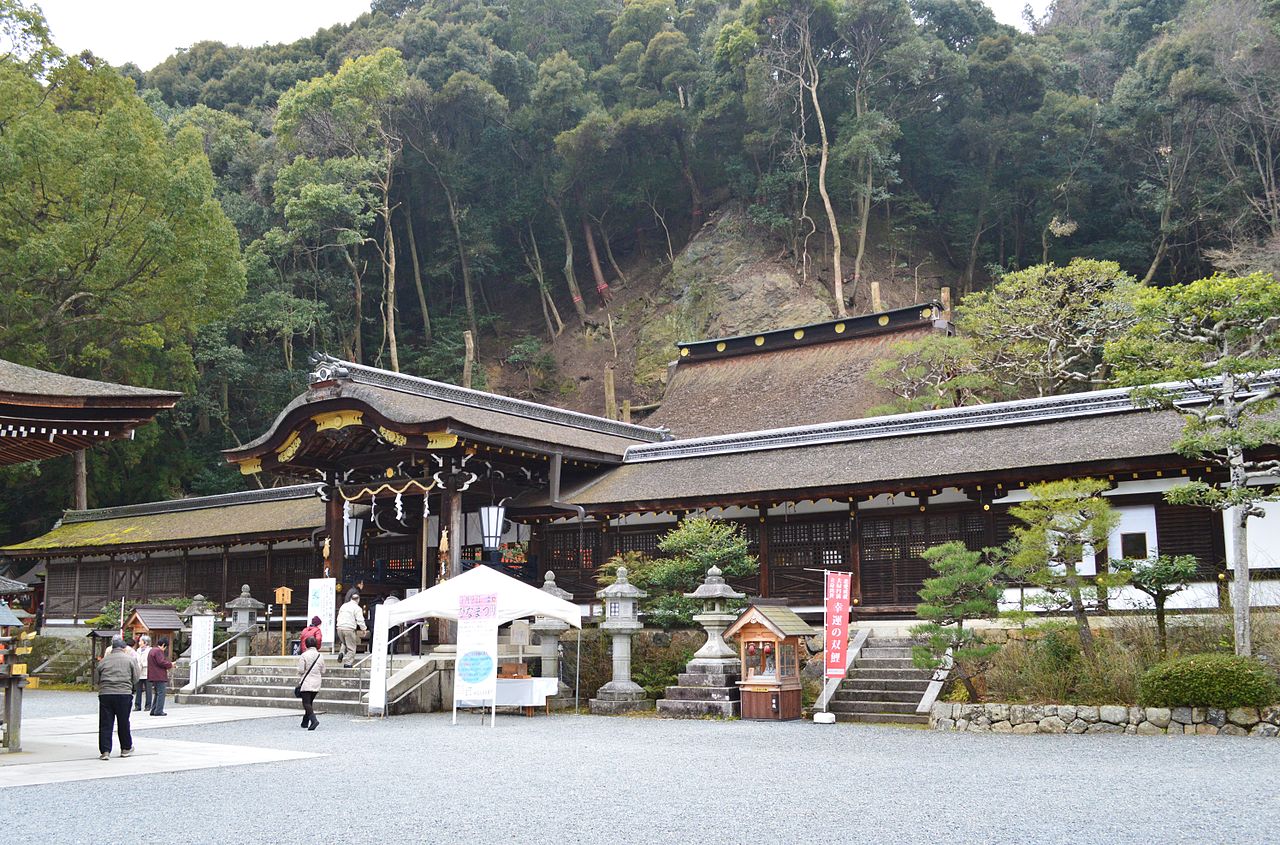
The main sanctuary, or Honden, is the architectural star. It was built during the Oei era, between 1394 and 1428, and substantially repaired in 1542. In a city where fire has destroyed so many ancient wooden buildings, this one survived, making it one of the oldest in Kyoto. It is designated an Important Cultural Property. Look closely at the roof. Most shrines in Kyoto use the nagare-zukuri style, where the roof is longer in front and shorter behind. Here the gabled roof sweeps down equally long at front and back, in a rare form called ryonagare-zukuri, also known as Matsuo-zukuri. It is covered in cypress bark, and the ends of the ridge box curve in a decorative shape called karahafu. The warm wood and bark contrast with the white walls between the pillars. The shrine also guards a remarkable collection of divine statues. Three are Important Cultural Properties, two male and one female, and 16 more are designated by Kyoto Prefecture. Then there are the gardens of Shofuen, three differently styled gardens using more than 200 stones. In late April, around 3,000 yamabuki, or kerria, bloom in golden yellow along the Ichinoi River between the tower gate and the main hall.