Enoshima Shrine Audio Guide

Three sanctuaries, one island and a goddess of the arts

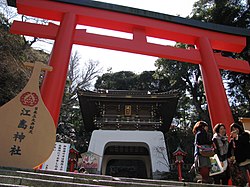
Enoshima Shrine
Photo by AimaimyiWikimedia CommonsCC BY-SA 3.0

6 min of listening · Section 1 of 5: Welcome to Enoshima Shrine

Prefer reading? The full guide is below

Here in person? Walk on with Mappu

This audio guide tells one place’s story. Walk Mode keeps going as you walk:

  • It knows where you are and talks about what’s in front of you, not only these chapters.
  • It takes you on to the next sight and follows what interests you.
  • Ask about anything you see, and it answers on the spot.
  • Your phone stays in your pocket.

A 2-hour live walk with Mappu, €4.99.

50 credits from the Starter pack. One-time purchase, no subscription.

Self-guided audio walk. No guide accompanies you. Not affiliated with the sites.

Keep exploring

Discover more places in Mappu.

Enoshima Shrine • Section 1 of 5

Enoshima Shrine: is there a free audio guide?

Quick answer. Yes. Mappu’s Enoshima Shrine audio guide (Kamakura, Japan) is free in your browser: 5 sections and about 6 minutes of listening, in 8 languages. It covers “Benzaiten and the Three Sanctuaries”, “Shoguns, Regents and the Caves of Iwaya” and “Legends, Scales and Wishing Trees”. In the Mappu app, Walk Mode narrates the places around you as you move and answers your follow-up questions.

Enoshima Shrine map

Mappu's own map of the place, with the paths and entrances OpenStreetMap shows around it.

Enoshima Shrine mapThe place on the map, with the guide's point marked.

Enoshima Shrine: what does the audio guide cover?

  1. 01

    Welcome to Enoshima Shrine

    Welcome to Enoshima Shrine, one of the great pilgrimage places of the Shonan coast. Strictly speaking, the island of Enoshima belongs to the city of Fujisawa in Kanagawa Prefecture. It sits just a short trip from Kamakura, and the two places share a deep common history that we will touch on along the way. Here is something worth knowing before you start climbing. Enoshima Shrine is not a single building. It is a family of three shrines, called Hetsumiya, Nakatsumiya and Okutsumiya, and together they carry the name Enoshima Shrine. They are strung out along the island, so visiting means taking a walk, with stairs, slopes and sea air included. The shrine is dedicated to Benzaiten, a goddess associated with artistry, music and wisdom. Over the next few minutes we will meet her, follow the footsteps of Kamakura's warrior rulers, and look at the legends and symbols woven into this island. Take your time, and enjoy the climb.

  2. 02

    Benzaiten and the Three Sanctuaries

    Let us start with the goddess. Enoshima is counted among the three most famous Benzaiten shrines in Japan, together with the shrines on Miyajima in Hiroshima Prefecture and on Chikubushima in Shiga Prefecture. Benzaiten is known as a deity of artistry, music and wisdom, which is why musicians, artists and students have long felt drawn to her. The shrine also holds a famous image of her, a sculpture known as Naked Benzaiten. This distinctive nude style is characteristic of the Kamakura Period, and it is one of the best-known treasures associated with the island's worship. Now look to the three sanctuaries themselves. Hetsumiya, Nakatsumiya and Okutsumiya are the three that make up Enoshima Shrine today. The name Enoshima Shrine for the whole group dates from the Meiji Period, when Shinto and Buddhism, long blended together on the island, were formally separated. Near the start of your walk, just over Enoshima Bentenbashi Bridge, stands a bronze torii gate. It was originally made of wood and was rebuilt in bronze in 1821, and the names of the donors who paid for it are carved right into it. Today it is a designated cultural property of Fujisawa City.

  3. 03

    Shoguns, Regents and the Caves of Iwaya

    Enoshima's story is tied closely to the warriors who ruled from Kamakura. Minamoto no Yoritomo, the first shogun of the Kamakura Shogunate, visited the shrine, and so did Hojo Tokimasa, the first regent. Tokimasa's visit is the best-told episode. The epic Taiheiki records that in the year 1190, he confined himself in the caves at Iwaya to pray for the prosperity of his children. Another telling describes this as a retreat lasting 21 days. Either way, the image is a powerful one: the most influential man in the shogunate, kneeling in a sea cave and praying for his descendants. At the far end of the island, the final main sanctuary, Okutsumiya, is approached through an old stone torii. Tradition attributes that gate to the first Kamakura shogun, in the year 1185. Notice how the geography works. The shrines lead you from the lively front of the island toward its older, quieter back, where the caves cut into the rock below. Following that route, you are walking the same spiritual path that medieval pilgrims took.

  4. 04

    Legends, Scales and Wishing Trees

    Enoshima is a place where myth and landscape run together. One tradition says the three goddesses enshrined here were born from a sacred oath between Amaterasu Omikami and Susanoo-no-Mikoto, two of the great figures of Japanese mythology. That is what gives the shrine its deep mythological weight. Another tale says the shrine began when people worshipped a god in one of the island's caves, by order of Emperor Kinmei, who reigned before Prince Shotoku. Treat that as the shrine's own founding legend, a story told about the very beginning of worship on Enoshima. Look for the shrine's crest as you walk. It shows three scales surrounded by oncoming waves, and it comes from a story known as the Legend of the Three Scales. It is a lovely emblem of an island ringed by the sea. Within the precinct you will also find a sacred tree called the musubi-no-ki, and on its branches hang many ema, small wooden votive tablets. They are left by people hoping for a good marriage match, so you can read a little of the visitors' hopes in them.

  5. 05

    Before You Head Off

    A few practical thoughts for your visit. The shrines are reached mainly on foot, and the terrain has plenty of stairs and slopes. If you would like an easier ascent, the paid Enoshima Escar escalator can help. From the Odakyu Line Katase-Enoshima Station, the Enoshima Dentetsu Line Enoshima Station or the Shonan Monorail Shonan-Enoshima Station, the walk to the shrine takes roughly 15 to 23 minutes. The pleasure boat Bentenmaru is another way to reach the island. Along the street leading up to the shrine, which pilgrims have cherished for centuries, you may want to try the local shirasu-don, a rice bowl topped with fresh whitebait, or the giant octopus rice crackers. If you come in summer, the island is lit by more than 1,000 lanterns during the Enoshima Toro season, and the path toward Okutsumiya becomes a glowing night walk. As you wander, keep asking yourself one thing: which of the three sanctuaries speaks to you most, and what did the warriors of Kamakura find in these caves that sent them praying here?

About this guide

AI-generated from 6 sources; checked automatically and last updated on October 31, 2026. Verify tickets and opening hours on the official site. Independent guide by Mappu. Not affiliated with or endorsed by the site or its managers.

Run a travel site or blog? Embed this audio guide for free.

Walk on from here

The nearest places with a Mappu audio guide, in walking order: about 0.5 km and 5 minutes on foot in all.

Route map: walking on from Enoshima Shrine3 numbered stops in walking order. Stop 1: Enoshima Shrine; Stop 2: Enoshima Sea Candle; Stop 3: Enoshima.Stop 1: Enoshima Shrine1Stop 2: Enoshima Sea Candle2Stop 3: Enoshima3
Distances are estimates: the straight line between places plus 30%.

Indicative route. While you walk, watch where you're going, mind the traffic and follow local signs and rules. The map is an aid, not a safety guide. Terms

  1. Enoshima ShrineThis guide

    about 0.2 km · about 2 min on foot

  2. Enoshima Sea Candle

    about 0.3 km · about 4 min on foot

  3. Enoshima
Photo attribution

Walk Mode, in the free Mappu app: 2 hours for 50 credits (€4.99 Starter pack)

Planning a trip to Kamakura?

Get your plan

Mappu sketches your days free in the chat, no account needed. Then take the full plan with you:

  • Weekend trip, €9.99: Your day-by-day plan plus 2 live walks
  • Save your trip’s free guides on your phone in the Mappu app: they play with no signal
See the trip packs

Already going? The 2-hour live walk in Kamakura is €4.99

Plan your trip on a map and get an audio guide for almost any place nearby: just tap it on the Mappu map.

Common questions

Enoshima Shrine: how long is the free audio guide?

About 6 minutes of listening in 5 sections: “Welcome to Enoshima Shrine”, “Benzaiten and the Three Sanctuaries”, “Shoguns, Regents and the Caves of Iwaya”, “Legends, Scales and Wishing Trees”, and “Before You Head Off”.

Enoshima Shrine: what can I ask Mappu after the guide?

You can ask follow-up questions such as “What is the difference between the three sanctuaries of Hetsumiya, Nakatsumiya and Okutsumiya, and how do they fit together as Enoshima Shrine?” and keep asking in Mappu, with the guide connected to your map and trip plan.