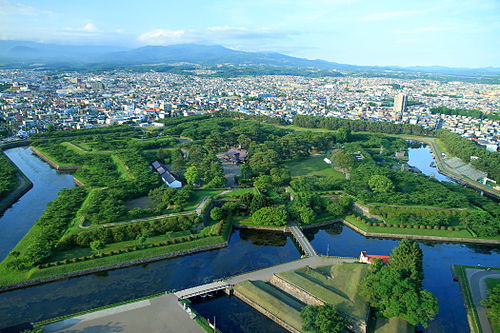
Hakodate Park Audio Guide

A Western-style park built by citizens on Mount Hakodate's slope

Hakodate Park
Photo by Iso10970Wikimedia CommonsCC BY-SA 4.0

6 min of listening · Section 1 of 5: Welcome to Hakodate Park

Prefer reading? The full guide is below

Here in person? Walk on with Mappu

This audio guide tells one place’s story. Walk Mode keeps going as you walk:

  • It knows where you are and talks about what’s in front of you, not only these chapters.
  • It takes you on to the next sight and follows what interests you.
  • Ask about anything you see, and it answers on the spot.
  • Your phone stays in your pocket.

A 2-hour live walk with Mappu, €4.99.

50 credits from the Starter pack. One-time purchase, no subscription.

Self-guided audio walk. No guide accompanies you. Not affiliated with the sites.

Keep exploring

Discover more places in Mappu.

Hakodate Park • Section 1 of 5

Hakodate Park: is there a free audio guide?

Quick answer. Yes. Mappu’s Hakodate Park audio guide (Hakodate, Japan) is free in your browser: 5 sections and about 6 minutes of listening, in 8 languages. It covers “Hakodate Park and the Consul's Big Idea”, “A Park Built by the Townspeople of Hakodate Park” and “Land, a Museum Plan and Honors at Hakodate Park”. In the Mappu app, Walk Mode narrates the places around you as you move and answers your follow-up questions.

Hakodate Park map

Mappu's own map of the place, with the paths and entrances OpenStreetMap shows around it.

Hakodate Park mapThe place on the map, with the guide's point marked.

Hakodate Park: what does the audio guide cover?

  1. 01

    Welcome to Hakodate Park

    Welcome to Hakodate Park, known in Japanese as Hakodate Kōen and written 函館公園. You are standing on the lower southeastern slope of Mount Hakodate, in a green pocket of the city that looks out over the Tsugaru Strait. This is a large Western-style park, and it is registered under Japan's Law for the Protection of Cultural Properties as a place of scenic beauty. This guide concentrates on the story of how the park came to be, because that story is unusually rich. It involves a British consul, a wealthy local merchant, ordinary townspeople carrying soil in their own hands, and a government that had to be persuaded. The park opened in 1879, and it is often described as one of the most representative city parks in modern Japan. So as you walk, think of this place less as a garden handed down from above and more as a project that a port town built for itself. Let's begin with the idea that started it all.

  2. 02

    Hakodate Park and the Consul's Big Idea

    Hakodate had been one of Japan's first international trading ports since 1859, opening alongside Yokohama and Nagasaki. Foreign residents lived here, and one of them changed the shape of this hillside: Richard Eusden, the British consul stationed in Hakodate. In the early 1870s, the Japanese government had issued a proclamation, dated January 15, 1873, encouraging scenic spots and historic sites to become public parks. The following year, crowded places such as ports were urged to set up parks with the agreement of their residents. But the very idea of a park was still unfamiliar to many people. Eusden argued for it with a memorable line: just as sick people need a hospital, healthy people need a place to rest. That sentence carries early European ideas of city planning and public health. Eusden's proposal, backed by the people of Hakodate, gave the park the form it took in 1879. When you feel the calm of this place, you are enjoying a notion that once needed an advocate.

  3. 03

    A Park Built by the Townspeople of Hakodate Park

    What makes Hakodate Park remarkable is who built it. A wealthy local merchant named Watanabe Kumashiro became the great champion of the project. He donated money toward the founding costs and gathered contributions from many other people, even putting in his own resources. But money was only part of the story. A man named Asada Seijiro supervised the construction work, and many citizens joined in with voluntary labor. They raised donations, grew and tended flowers and plants, and carried soil to shape the grounds. Researchers who study the park point to this resident participation as one of its defining characteristics. So picture the slope not as a finished landscape but as a shared work site, with merchants and neighbors working side by side. A park that people have physically helped to make tends to be one they feel belongs to them, and that spirit is part of Hakodate Park's identity to this day.

  4. 04

    Land, a Museum Plan and Honors at Hakodate Park

    Why did the park rise here? Hakodate lacked the famous sights and sprawling temple or shrine grounds that served as public gathering places in many other Japanese cities. So the planners looked to government-owned land in the Yachigashira area, an official farm called Goyobatake, and its surroundings. The park was created through cooperation between officials and citizens. The early story had a twist. When the Hakodate local government applied to open a park in 1874, the Tokyo authorities raised concerns. In response, Hakodate came up with a fresh proposal: a museum on the park grounds. Historians read that idea as the spark that moved prominent townspeople to donate. Between the opening in 1874 and the renovation of 1878, the park's three hallmarks took shape: its location, the participation of residents, and the museum. Today the recognition is wide. Besides its registration as a place of scenic beauty, the park has been selected among Japan's 100 historical parks and was certified on May 1, 2010 as the first Hokkaido landscape heritage site. The land itself is national property, lent to the city of Hakodate free of charge.

  5. 05

    Before You Head Off from Hakodate Park

    As you wander on, keep the slope of Mount Hakodate beneath your feet in mind, along with the strait glimmering beyond. This was once farmland, then an experiment in Western-style public space, and then a shared project of a whole port town. You may also come across more recent chapters. Local reports have described the park's Ferris wheel as the oldest one still in operation in Japan, and the park's animal facilities were renewed and reopened in April 2010. They are small reminders that this park has kept evolving for well over a century. As you stroll, try to spot where a local donor, a volunteer gardener or a soil carrier might once have worked, and ask yourself what a place looks like when its neighbors help create it. There is always more to notice here, so let your curiosity pick the next path.

About this guide

AI-generated from 6 sources; reviewed for accuracy and last updated on October 31, 2026. Verify tickets and opening hours on the official site. Independent guide by Mappu. Not affiliated with or endorsed by the site or its managers.

Run a travel site or blog? Embed this audio guide for free.

Walk on from here

This place is stop 3 of 4 of a self-guided walk: Orthodox Church to the Mashu-maru, Hakodate. About 5.4 km and 70 minutes on foot, plus about 25 minutes of listening.

Route map: walking on from Hakodate Park4 numbered stops in walking order. Stop 1: Hakodate Orthodox Church; Stop 2: Hakodate Hachimangu Shrine; Stop 3: Hakodate Park; Stop 4: Ferry Memorial Ship Mashu-maru.Stop 1: Hakodate Orthodox Church1Stop 2: Hakodate Hachimangu Shrine2Stop 3: Hakodate Park3Stop 4: Ferry Memorial Ship Mashu-maru4
Distances are estimates along the walking route, from OpenStreetMap.

Indicative route. While you walk, watch where you're going, mind the traffic and follow local signs and rules. The map is an aid, not a safety guide. Terms

  1. Hakodate Orthodox Church

    about 1.9 km · about 25 min on foot

  2. Hakodate Hachimangu Shrine

    about 1.1 km · about 15 min on foot

  3. Hakodate ParkThis guide

    about 2.4 km · about 32 min on foot

  4. Ferry Memorial Ship Mashu-maru
Photo attribution

Walk Mode, in the free Mappu app: 2 hours for 50 credits (€4.99 Starter pack)

See the whole walk

Planning a trip to Hakodate?

Get your plan

Mappu sketches your days free in the chat, no account needed. Then take the full plan with you:

  • Weekend trip, €9.99: Your day-by-day plan plus 2 live walks
  • Save your trip’s free guides on your phone in the Mappu app: they play with no signal
See the trip packs

Already going? The 2-hour live walk in Hakodate is €4.99

Plan your trip on a map and get an audio guide for almost any place nearby: just tap it on the Mappu map.

Common questions

Hakodate Park: how long is the free audio guide?

About 6 minutes of listening in 5 sections: “Welcome to Hakodate Park”, “Hakodate Park and the Consul's Big Idea”, “A Park Built by the Townspeople of Hakodate Park”, “Land, a Museum Plan and Honors at Hakodate Park”, and “Before You Head Off from Hakodate Park”.

Hakodate Park: what can I ask Mappu after the guide?

You can ask follow-up questions such as “How did Richard Eusden's argument that healthy people also need a place to rest change the way Hakodate thought about parks?” and keep asking in Mappu, with the guide connected to your map and trip plan.