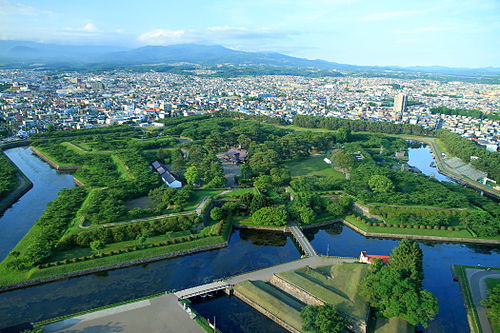
Odori Park Audio Guide

Audio guide for Odori Park

Odori Park
Photo by redlegsfan21Wikimedia CommonsCC BY-SA 2.0

6 min of listening · Section 1 of 5: Welcome to Odori Park

Prefer reading? The full guide is below

Here in person? Walk on with Mappu

This audio guide tells one place’s story. Walk Mode keeps going as you walk:

  • It knows where you are and talks about what’s in front of you, not only these chapters.
  • It takes you on to the next sight and follows what interests you.
  • Ask about anything you see, and it answers on the spot.
  • Your phone stays in your pocket.

A 2-hour live walk with Mappu, €4.99.

50 credits from the Starter pack. One-time purchase, no subscription.

Self-guided audio walk. No guide accompanies you. Not affiliated with the sites.

Keep exploring

Discover more places in Mappu.

Odori Park • Section 1 of 5

Odori Park: is there a free audio guide?

Quick answer. Yes. Mappu’s Odori Park audio guide (Sapporo, Japan) is free in your browser: 5 sections and about 6 minutes of listening, in 8 languages. It covers “A Firebreak Becomes a Park at Odori Park”, “Snow, Song and Summer Crowds at Odori Park” and “Trees, Tower and Landmarks of Odori Park”. In the Mappu app, Walk Mode narrates the places around you as you move and answers your follow-up questions.

Odori Park map

Mappu's own map of the place, with the paths and entrances OpenStreetMap shows around it.

Odori Park mapThe place on the map, with the guide's point marked.

Odori Park: what does the audio guide cover?

  1. 01

    Welcome to Odori Park

    Welcome to Odori Park, known in Japanese as 大通公園, a long ribbon of green running through the heart of Sapporo, on the island of Hokkaido. The name simply means large street, and that is a fair clue to how it began. The park stretches east to west for about 1.5 kilometers, from the first block west of its starting point to the twelfth block west, and it covers 78,901 square meters. As you walk it, you are standing on a dividing line. To the north lie government offices and business towers. To the south lie department stores, shopping streets and restaurants, with the entertainment district of Susukino beyond. In the next few minutes we will look at why this strip exists, how a student-built snow display grew into a world-famous festival, what grows here, and which landmarks to look out for. Let's start by picturing Sapporo before the park was here.

  2. 02

    A Firebreak Becomes a Park at Odori Park

    The story starts in 1869, when the Hokkaido Development Commission was established. A government judge named Shima Yoshitake was sent to found a central city, and he imagined Sapporo as a grid of tidy blocks. In his plan, a large street would divide the city, with offices and officials to the north and homes to the south. Shima was later dismissed for misgovernment in Hokkaido, and Iwamura Michitoshi took over the urban planning. In 1871 he reshaped the plan, and a wide firebreak was built exactly where Odori Park lies today. Its job was practical: to stop a fire in the crowded southern districts from racing north into the government quarter. So the street that was meant to be the main road became a park, and the firebreak's old purpose is still visible in the city. Even now the north and south sides of the park feel like two different towns.

  3. 03

    Snow, Song and Summer Crowds at Odori Park

    Odori Park is the city's great stage. In early summer it hosts the YOSAKOI Soran festival. In summer come the beer garden and the Bon festival season. In winter the park fills with the Snow Festival and the White Illumination, and the Sapporo Lilac Festival is also held here. The Snow Festival has humble roots. In 1950, not long after the war, junior high and high school students built six snow statues here to lift the mood of a gloomy time. People played snowball fights, enjoyed a carnival, and crowds came to watch. Large snow sculptures first appeared in 1953. Today Odori Park alone shows more than 200 snow statues, and around 2 million visitors come from Japan and abroad to see them. From six statues to a festival of that scale, all in the same long strip of park you are walking now.

  4. 04

    Trees, Tower and Landmarks of Odori Park

    Look up and around you. The park holds as many as 4700 trees of 92 species, including the lilac, which is the official tree of Sapporo. Lilac season is celebrated with its own festival here. The most recognizable landmark is the Sapporo Television Tower, which stands within the park. It was built in 1957, rises 147.2 meters, and is beautifully illuminated at night. Another landmark is the Sapporo City Archive Museum, built as the Sapporo Court of Appeals in September 1926 from bricks, Sapporo soft stone and reinforced concrete. It took its present name in 1973 and was listed as a Registered Tangible Cultural Property in 1997. The area around the park is also a transport crossroads. Odori Station, beneath the park, is where three subway lines meet. Outside Tokyo and Osaka, it is the only station in Japan with three subway lines. The park has also been named among the hundred best roads of Japan and the hundred best urban parks of Japan.

  5. 05

    Before You Head Off from Odori Park

    Odori Park is still growing. In 2016 the city announced a plan to extend it about 100 meters to the east, across the Soseigawa, tying both banks into one lively district. As you wander on, try a few things. Notice how the mood changes as you glance north and then south. Look for the Sapporo Television Tower rising between the trees. See whether you can spot the old brick-and-stone archive museum. And picture the same open ground in winter, filled with snow statues, or in summer, alive with festivals. Every block has its own character, so the park rewards a slow stroll from one end to the other. What will you notice first?

About this guide

AI-generated from 6 sources; checked automatically and last updated on October 31, 2026. Verify tickets and opening hours on the official site. Independent guide by Mappu. Not affiliated with or endorsed by the site or its managers.

Run a travel site or blog? Embed this audio guide for free.

Walk on from here

This place is stop 4 of 5 of a self-guided walk: TV Tower to the Museum of Modern Art, Sapporo. About 4.6 km and 60 minutes on foot, plus about 30 minutes of listening.

Route map: walking on from Odori Park5 numbered stops in walking order. Stop 1: Sapporo TV Tower; Stop 2: Kita Ichijo Catholic Church; Stop 3: Sapporo Clock Tower; Stop 4: Odori Park; Stop 5: Hokkaido Museum of Modern Art.Stop 1: Sapporo TV Tower1Stop 2: Kita Ichijo Catholic Church2Stop 3: Sapporo Clock Tower3Stop 4: Odori Park4Stop 5: Hokkaido Museum of Modern Art5
Distances are estimates along the walking route, from OpenStreetMap.

Indicative route. While you walk, watch where you're going, mind the traffic and follow local signs and rules. The map is an aid, not a safety guide. Terms

  1. Sapporo TV Tower

    about 1.1 km · about 15 min on foot

  2. Kita Ichijo Catholic Church

    about 1.1 km · about 14 min on foot

  3. Sapporo Clock Tower

    about 0.9 km · about 12 min on foot

  4. Odori ParkThis guide

    about 1.6 km · about 21 min on foot

  5. Hokkaido Museum of Modern Art
Photo attribution

Walk Mode, in the free Mappu app: 2 hours for 50 credits (€4.99 Starter pack)

See the whole walk

Planning a trip to Sapporo?

Get your plan

Mappu sketches your days free in the chat, no account needed. Then take the full plan with you:

  • Weekend trip, €9.99: Your day-by-day plan plus 2 live walks
  • Save your trip’s free guides on your phone in the Mappu app: they play with no signal
See the trip packs

Already going? The 2-hour live walk in Sapporo is €4.99

Plan your trip on a map and get an audio guide for almost any place nearby: just tap it on the Mappu map.

Common questions

Odori Park: how long is the free audio guide?

About 6 minutes of listening in 5 sections: “Welcome to Odori Park”, “A Firebreak Becomes a Park at Odori Park”, “Snow, Song and Summer Crowds at Odori Park”, “Trees, Tower and Landmarks of Odori Park”, and “Before You Head Off from Odori Park”.

Odori Park: what can I ask Mappu after the guide?

You can ask follow-up questions such as “Why did Sapporo's planners build a firebreak here, and how does it still shape the difference between the north and south sides of the city?” and keep asking in Mappu, with the guide connected to your map and trip plan.