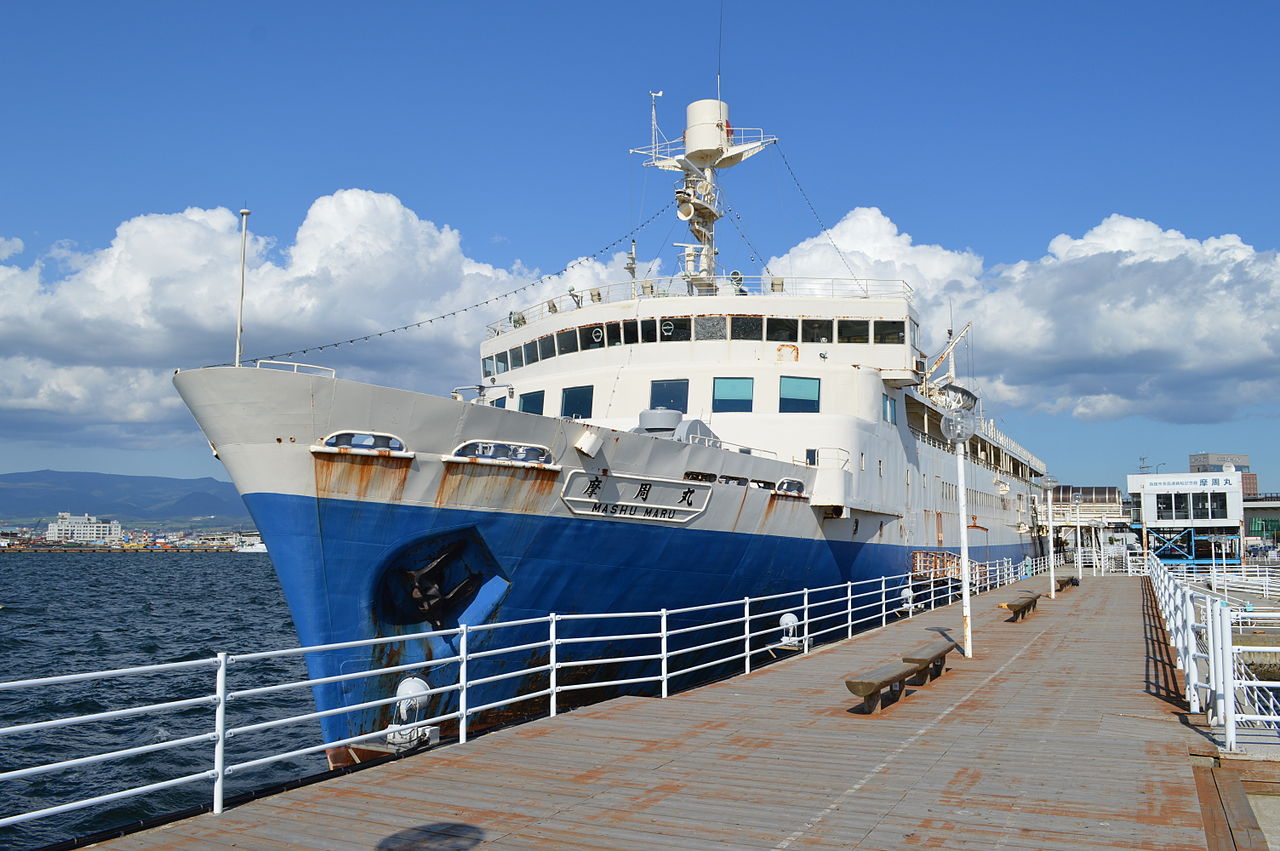
Your visit begins on the second floor, in the entrance and welcome lobby. The third floor holds the History of the Seikan Ferries corner, the Ship Mechanism Exhibition Room, a library corner, a rope-knotting corner and a seaside salon. Restored first-class reserved seats and ordinary seats are also on display, so you can sit where passengers once settled in for the crossing. The fourth floor is the highlight for many visitors. The wheelhouse, where the captain commanded the ship, and the radio room are kept in the state of the ferry's working days, and you are even allowed to touch the navigation instruments. Those heavy dials and controls make it easy to imagine the strait at night. The salon occupies rooms that were once used by the captain and the officers, and from here you have a sweeping view of Hakodate harbor and Mount Hakodate. Mashu-maru was one of the ferries that closed the Seikan era, together with Hachikoda-maru, Daisetsu-maru, Yotei-maru, Towada-maru, Sorachi-maru, Hiyama-maru and Ishikari-maru, and standing at that window you are looking at the same harbor those ships once crossed to reach.