Lukang Xingan Temple Audio Guide

The first Mazu temple of Lukang, built by Xinghua settlers

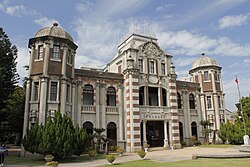
Lukang Xingan Temple
Photo by Suzuki1314Wikimedia CommonsPublic domain

4 min of listening · Section 1 of 5: Welcome to Lukang Xingan Temple

Prefer reading? The full guide is below

Here in person? Walk on with Mappu

This audio guide tells one place’s story. Walk Mode keeps going as you walk:

  • It knows where you are and talks about what’s in front of you, not only these chapters.
  • It takes you on to the next sight and follows what interests you.
  • Ask about anything you see, and it answers on the spot.
  • Your phone stays in your pocket.

A 2-hour live walk with Mappu, €4.99.

50 credits from the Starter pack. One-time purchase, no subscription.

Self-guided audio walk. No guide accompanies you. Not affiliated with the sites.

Keep exploring

Discover more places in Mappu.

Lukang Xingan Temple • Section 1 of 5

Lukang Xingan Temple: is there a free audio guide?

Quick answer. Yes. Mappu’s Lukang Xingan Temple audio guide (Lukang, Taiwan) is free in your browser: 5 sections and about 4 minutes of listening, in 8 languages. It covers “A Goddess Carried from Xinghua”, “A Temple Squeezed into the Town” and “A Town of Many Homelands”. In the Mappu app, Walk Mode narrates the places around you as you move and answers your follow-up questions.

Lukang Xingan Temple map

Mappu's own map of the place, with the paths and entrances OpenStreetMap shows around it.

Lukang Xingan Temple mapThe place on the map, with the guide's point marked.

Lukang Xingan Temple: what does the audio guide cover?

  1. 01

    Welcome to Lukang Xingan Temple

    Welcome to Lukang, the old port town in Changhua County on Taiwan's western coast, and to one of its quietest treasures: Xingan Temple. Lukang is famous for its temples, and this is a compact one. So this guide stays close to what is firmly known about it and about the town around it. Xingan Temple is dedicated to Tianshang Shengmu, the Heavenly Mother, whom most people know as Mazu, the goddess who watches over travelers and sailors. It is the first Mazu temple ever built in Lukang, and it is recognized as a national historic site. Yet it is far less crowded than the town's better-known Mazu temple, so you can often take in the atmosphere at an easier pace. Over the next few minutes we will look at who built it and why, at the clever way it squeezes into the town, and at what it tells us about the many peoples who made Lukang what it is. Settle in, because this small temple has a big story.

  2. 02

    A Goddess Carried from Xinghua

    Start with the founding date. Xingan Temple was built in the twenty-third year of the Kangxi Emperor's reign in the Qing era, which corresponds to 1684. That makes it the first Mazu temple in Lukang, and it still stands among the town's oldest places of worship. The heart of the story is a journey. The statue of Mazu enshrined here was brought across the sea to Lukang from Xinghua, in Fujian province on the Chinese mainland. That is why the goddess here is often called Xinghua Mazu, and why the temple itself was also known as the Xinghua Mazu Temple. Even the name carries the memory of home. Xingan is understood to mean safety in Xinghua, or peace to Xinghua. Imagine settlers leaving a familiar coast, crossing open water, and carrying their protector with them. A temple named for the peace of their homeland was a way of keeping that homeland close, and of giving thanks for a safe arrival.

  3. 03

    A Temple Squeezed into the Town

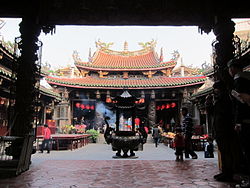
    Now look at how the temple sits in the street. Most grand temples spread out in wide courtyards, but Xingan Temple could not. Lukang grew quickly, and land was divided into narrow strips. The temple ended up sandwiched between neighboring buildings, which makes it what scholars call a townhouse temple. Within that tight footprint, the layout is neat and logical. A courtyard lies in front. Behind it stand two main structures, together with a baiting, a worship pavilion where devotees gather to offer prayers. The facade is one room wide, and the entrance is a three-door building in the Sanchuan style. There is another detail to enjoy. Like most early Mazu temples, Xingan Temple was built without interior posts and room divisions, which gives it a simple but elegant appearance. As you stand there, notice how a modest frontage opens into a calm, uncluttered space. It shows that a temple's importance has little to do with its size.

  4. 04

    A Town of Many Homelands

    To understand why Xingan Temple matters, widen the view to Lukang itself. The area was first home to the Pingpu people of the Babuza tribe. Later, settlers arrived from Fujian's Xinghua, Quanzhou and Zhangzhou, as well as Hakka settlers from Canton. Lukang grew into one of Taiwan's biggest commercial and cultural cities of its time. Each group built its own temple, and that is the key to reading the town. Xinghua settlers built Xingan Temple, and it also served as their gathering place. Settlers from Zhangzhou built Nanching Temple, and Hakka settlers from Canton built San Shek Wan Temple. So the temples work like a map of who came from where. While you are in town, keep an eye out for another local peculiarity. Lukang is known for courtyard walls made from empty Shaoshing wine jars, which are both decorative and practical. Between the temples and the jar walls, the town rewards anyone who strolls slowly and looks closely.

  5. 05

    Before You Head Off

    Xingan Temple rewards a slow visit. It is not the biggest or the most famous temple in Lukang, but it is the first Mazu temple in town, and it began as a place where homesick settlers gathered under the protection of a goddess they carried across the sea. As you take your leave, try a small observation exercise. Notice how the temple fits between its neighbors, and think about how its narrow frontage hides a courtyard, a worship pavilion and two main structures. Then consider how many other temples in Lukang were built by settlers from other homelands. Each temple you meet is another chapter in how people from different places turned a port into a home.

About this guide

AI-generated from 6 sources; reviewed for accuracy and last updated on November 1, 2026. Verify tickets and opening hours on the official site. Independent guide by Mappu. Not affiliated with or endorsed by the site or its managers.

Run a travel site or blog? Embed this audio guide for free.

Walk on from here

The nearest places with a Mappu audio guide, in walking order: about 2.9 km and 40 minutes on foot in all.

Route map: walking on from Lukang Xingan Temple5 numbered stops in walking order. Stop 1: Lukang Xingan Temple; Stop 2: Lukang Folk Arts Museum; Stop 3: Lukang Longshan Temple; Stop 4: Lukang Dicangwang Temple; Stop 5: Lukang Matsu Temple.Stop 1: Lukang Xingan Temple1Stop 2: Lukang Folk Arts Museum2Stop 3: Lukang Longshan Temple3Stop 4: Lukang Dicangwang Temple4Stop 5: Lukang Matsu Temple5
Distances are estimates: the straight line between places plus 30%.

Indicative route. While you walk, watch where you're going, mind the traffic and follow local signs and rules. The map is an aid, not a safety guide. Terms

  1. Lukang Xingan TempleThis guide

    about 0.2 km · about 3 min on foot

  2. Lukang Folk Arts Museum

    about 0.5 km · about 7 min on foot

  3. Lukang Longshan Temple

    about 0.4 km · about 5 min on foot

  4. Lukang Dicangwang Temple

    about 1.7 km · about 23 min on foot

  5. Lukang Matsu Temple
Photo attribution

Walk Mode, in the free Mappu app: 2 hours for 50 credits (€4.99 Starter pack)

Planning a trip to Lukang?

Get your plan

Mappu sketches your days free in the chat, no account needed. Then take the full plan with you:

  • Weekend trip, €9.99: Your day-by-day plan plus 2 live walks
  • Save your trip’s free guides on your phone in the Mappu app: they play with no signal
See the trip packs

Already going? The 2-hour live walk in Lukang is €4.99

Plan your trip on a map and get an audio guide for almost any place nearby: just tap it on the Mappu map.

Common questions

Lukang Xingan Temple: how long is the free audio guide?

About 4 minutes of listening in 5 sections: “Welcome to Lukang Xingan Temple”, “A Goddess Carried from Xinghua”, “A Temple Squeezed into the Town”, “A Town of Many Homelands”, and “Before You Head Off”.

Lukang Xingan Temple: what can I ask Mappu after the guide?

You can ask follow-up questions such as “What does the name Xingan tell us about the people who built this temple?” and keep asking in Mappu, with the guide connected to your map and trip plan.