Lin Family Ancestral Shrine Audio Guide

A clan's hall of memory in the East District of Taichung

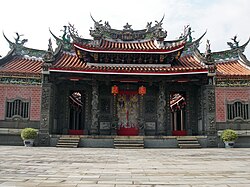
Lin Family Ancestral Shrine
Photo by Fcuk1203Wikimedia CommonsCC BY-SA 3.0

5 min of listening · Section 1 of 5: Welcome to Lin Family Ancestral Shrine

Prefer reading? The full guide is below

Here in person? Walk on with Mappu

This audio guide tells one place’s story. Walk Mode keeps going as you walk:

  • It knows where you are and talks about what’s in front of you, not only these chapters.
  • It takes you on to the next sight and follows what interests you.
  • Ask about anything you see, and it answers on the spot.
  • Your phone stays in your pocket.

A 2-hour live walk with Mappu, €4.99.

50 credits from the Starter pack. One-time purchase, no subscription.

Self-guided audio walk. No guide accompanies you. Not affiliated with the sites.

Keep exploring

Discover more places in Mappu.

Lin Family Ancestral Shrine • Section 1 of 5

Lin Family Ancestral Shrine: is there a free audio guide?

Quick answer. Yes. Mappu’s Lin Family Ancestral Shrine audio guide (Taichung, Taiwan) is free in your browser: 5 sections and about 5 minutes of listening, in 8 languages. It covers “A Shrine on the Move”, “Chen Yingshan and the Hokkien Style” and “Protection and Lantern Light”. In the Mappu app, Walk Mode narrates the places around you as you move and answers your follow-up questions.

Lin Family Ancestral Shrine map

Mappu's own map of the place, with the paths and entrances OpenStreetMap shows around it.

Lin Family Ancestral Shrine mapThe place on the map, with the guide's point marked.

Lin Family Ancestral Shrine: what does the audio guide cover?

  1. 01

    Welcome to Lin Family Ancestral Shrine

    Welcome to the Lin Family Ancestral Shrine, tucked into the East District of Taichung City. Here is how this guide works: the shrine's building, its builder and its journey across the Taichung area are well documented, while room-by-room details of the interior are not, so we will stay with the stories that stand on firm ground. An ancestral shrine is a particular kind of place. It is not a temple for a deity, but a hall where a family honors its forebears and holds its identity together. The Lin family is a large and influential clan in the history of central Taiwan, and this shrine is regarded as the most important one for people with the surname Lin in the central part of the island. Over the next few minutes we will look at the shrine's long journey to this spot, the master carpenter behind it, the architecture, and the lanterns that light it up in early spring. Settle in, and picture a family history carried from place to place until it found a permanent home.

  2. 02

    A Shrine on the Move

    This shrine has not always stood where you find it today. Its story begins in what is now Dali District, just south of Taichung City, where it was first built during the Jiaqing era of the Qing dynasty, between 1796 and 1821. Think of it as a clan's heart that traveled with its people. Over time the shrine moved location several times. It finally settled in the East District of Taichung in 1930, and that is the date usually given for the building you see now. It sits just off a main artery of the city, close to Guoguang Road. There is something moving in that. A modern city grew up around a hall dedicated to remembering the past, and the Lin family found it a lasting place in the middle of it.

  3. 03

    Chen Yingshan and the Hokkien Style

    The shrine was designed by Chen Yingshan and built in the traditional Hokkien style, the architecture of southern Fujian that Taiwan's early settlers brought across the strait. Chen Yingshan was a master carpenter from Zhangzhou, and he supervised the construction of the timber frame. In buildings like this, the roof, beams and joinery are the real signature of the craft. The halls follow a siheyuan layout, the classic arrangement of buildings around open courtyards. Here the halls divide the central space into seven courtyards of various sizes. Imagine moving through a sequence of open-air rooms, each with its own proportion of light and sky, before you reach the heart of the complex. The Taichung City Government's Cultural Affairs Bureau describes the site as a showcase of the elegance of Minnan-style architecture. Minnan simply means southern Fujian, which is where this tradition comes from.

  4. 04

    Protection and Lantern Light

    On November twenty-seventh, 1985, the Taichung City Government protected the shrine as a city monument. That decision recognized it as part of the city's shared heritage, not only the Lin family's. Today the shrine is also a stage for living craft. In early spring, around the Lantern Festival, the Taichung City Cultural Affairs Bureau has invited visitors to come and see the lanterns here. Cultural heritage preserver Hsieh Chih-Yun designed and produced all the new lanterns, inside and out. They feature classic Song-style characters and auspicious designs, and his traditional craftsmanship blends with the historic setting. Lanterns are woven into folk life, from temple ceremonies to weddings and funerals at home. So when you see them glowing against the timber and tile, you are looking at a custom that still carries real meaning in Taiwanese daily life.

  5. 05

    Before You Head Off

    As you leave, notice how the shrine sits within the city around it. Within a short walk are other places that tell Taichung's story, including the Taichung Cultural and Creative Industries Park and the Taichung Prefectural Hall, so the shrine can be one chapter in a longer walk through the city's past. While you are here, try following the rhythm of the courtyards and imagine how a family gathered, one open space after another. Look for the lines of the roof and the timber frame that Chen Yingshan oversaw, and see how the lanterns, if they are lit, echo old Song-style lettering. A hall that has traveled from Dali to the East District, and that still welcomes new lanterns, has plenty left to show anyone who looks closely.

About this guide

AI-generated from 6 sources; checked automatically and last updated on November 1, 2026. Verify tickets and opening hours on the official site. Independent guide by Mappu. Not affiliated with or endorsed by the site or its managers.

Run a travel site or blog? Embed this audio guide for free.

Walk on from here

The nearest places with a Mappu audio guide, in walking order: about 2.6 km and 35 minutes on foot in all.

Route map: walking on from Lin Family Ancestral Shrine4 numbered stops in walking order. Stop 1: Lin Family Ancestral Shrine; Stop 2: National Taiwan Museum of Comics; Stop 3: Taichung Literature Museum; Stop 4: National Taiwan Museum of Fine Arts.Stop 1: Lin Family Ancestral Shrine1Stop 2: National Taiwan Museum of Comics2Stop 3: Taichung Literature Museum3Stop 4: National Taiwan Museum of Fine Arts4
Distances are estimates: the straight line between places plus 30%.

Indicative route. While you walk, watch where you're going, mind the traffic and follow local signs and rules. The map is an aid, not a safety guide. Terms

  1. Lin Family Ancestral ShrineThis guide

    about 0.6 km · about 8 min on foot

  2. National Taiwan Museum of Comics

    about 0.8 km · about 11 min on foot

  3. Taichung Literature Museum

    about 1.2 km · about 17 min on foot

  4. National Taiwan Museum of Fine Arts
Photo attribution

Walk Mode, in the free Mappu app: 2 hours for 50 credits (€4.99 Starter pack)

Planning a trip to Taichung?

Get your plan

Mappu sketches your days free in the chat, no account needed. Then take the full plan with you:

  • Weekend trip, €9.99: Your day-by-day plan plus 2 live walks
  • Save your trip’s free guides on your phone in the Mappu app: they play with no signal
See the trip packs

Already going? The 2-hour live walk in Taichung is €4.99

Plan your trip on a map and get an audio guide for almost any place nearby: just tap it on the Mappu map.

Common questions

Lin Family Ancestral Shrine: how long is the free audio guide?

About 5 minutes of listening in 5 sections: “Welcome to Lin Family Ancestral Shrine”, “A Shrine on the Move”, “Chen Yingshan and the Hokkien Style”, “Protection and Lantern Light”, and “Before You Head Off”.

Lin Family Ancestral Shrine: what can I ask Mappu after the guide?

You can ask follow-up questions such as “How did the shrine travel from the Dali area to the East District of Taichung before settling there in 1930?” and keep asking in Mappu, with the guide connected to your map and trip plan.