Ōwakudani Audio Guide

Hakone's Great Boiling Valley

Ōwakudani
Photo by ohkuboWikimedia CommonsCC BY-SA 3.0

6 min of listening · Section 1 of 5: Welcome to Ōwakudani

Prefer reading? The full guide is below

Here in person? Walk on with Mappu

This audio guide tells one place’s story. Walk Mode keeps going as you walk:

  • It knows where you are and talks about what’s in front of you, not only these chapters.
  • It takes you on to the next sight and follows what interests you.
  • Ask about anything you see, and it answers on the spot.
  • Your phone stays in your pocket.

A 2-hour live walk with Mappu, €4.99.

50 credits from the Starter pack. One-time purchase, no subscription.

Self-guided audio walk. No guide accompanies you. Not affiliated with the sites.

Keep exploring

Discover more places in Mappu.

Ōwakudani • Section 1 of 5

Ōwakudani: is there a free audio guide?

Quick answer. Yes. Mappu’s Ōwakudani audio guide (Hakone, Japan) is free in your browser: 5 sections and about 6 minutes of listening, in 8 languages. It covers “A Valley Born of Eruption”, “From Hell Valley to Great Boiling Valley” and “Black Eggs and a Promise of Longer Life”. In the Mappu app, Walk Mode narrates the places around you as you move and answers your follow-up questions.

Ōwakudani map

Mappu's own map of the place, with the paths and entrances OpenStreetMap shows around it.

Ōwakudani mapThe place on the map, with the guide's point marked.

Ōwakudani: what does the audio guide cover?

  1. 01

    Welcome to Ōwakudani

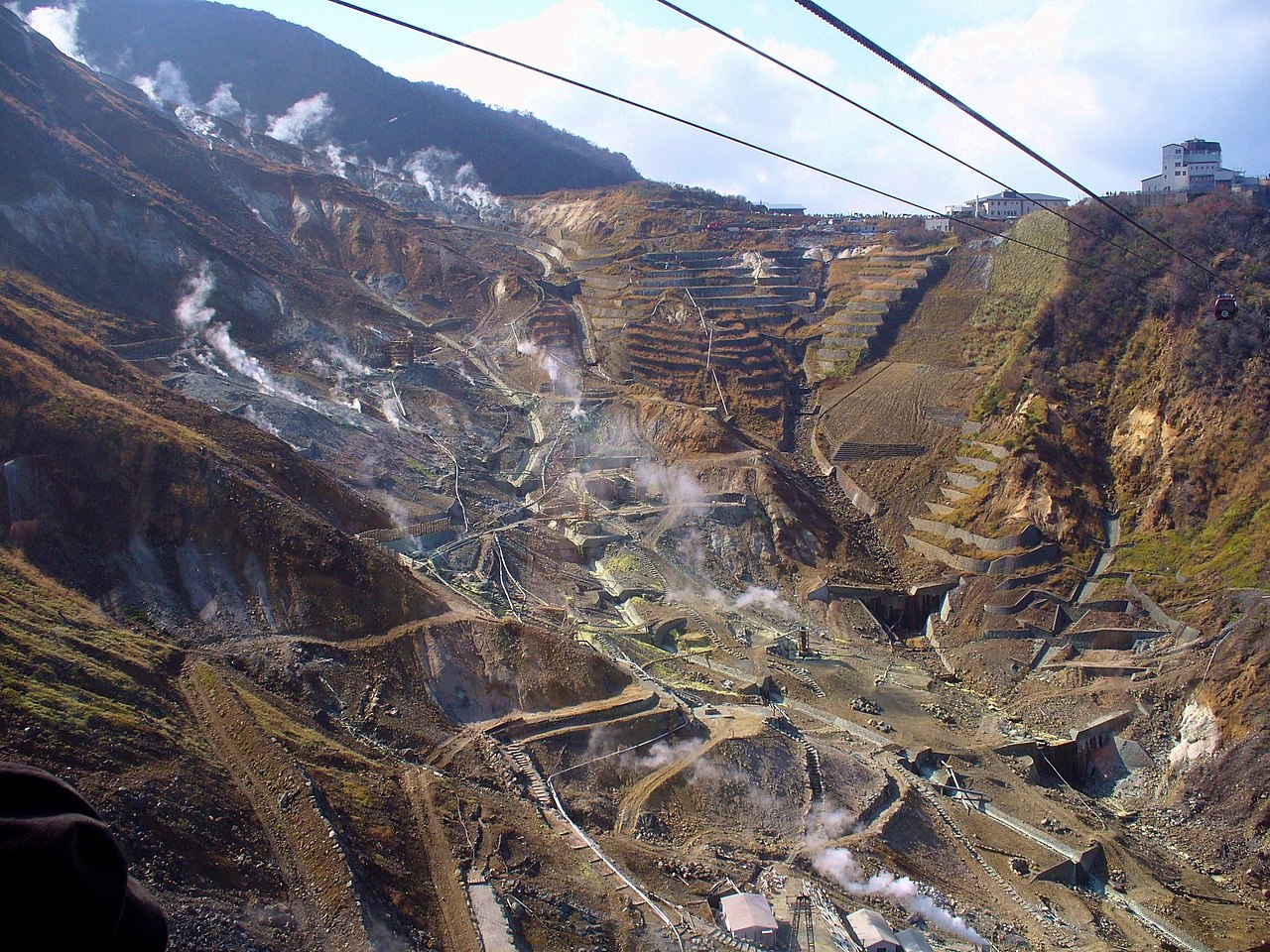
    Welcome to Ōwakudani, the steaming heart of Hakone, in Kanagawa Prefecture. Its name means Great Boiling Valley, and the name is honest. Here, vents spew sulfurous steam from reddish-brown, rocky ground, and the air carries the smell of volcanic gas. Hakone is a live volcano. That is easy to forget while you admire clear Lake Ashi, wander the fields of Sengokuhara, or soak in one of the area's many hot springs. Ōwakudani is where Hakone reminds you. It is the epicenter of the volcano's activity, and the heat that keeps so many of Hakone's hot springs hot is tied to this ground. Over the next few stops, we will look at how this valley was born, how it earned and then changed its name, and why a small black egg has become its celebrated trademark. We will also look at how you actually get here, because the journey is part of the experience. Take a slow breath, and let's begin.

  2. 02

    A Valley Born of Eruption

    To understand Ōwakudani, go back about 130,000 years. Eruptions in the Hakone caldera first built a cone-shaped volcano at its center. That central cone has collapsed and risen again several times over the millennia. The valley you see today took shape roughly 3,000 years ago. Another explosive breakdown of the central cone sent pyroclastic flows racing across the landscape, and they blocked the nearby Haya River. The dry valley now lies where the cone once stood. Because Ōwakudani sits so close to the very center of the huge Hakone volcano, it is a hotbed of geological activity. Steam and gases heated by underground magma are emitted constantly. Look toward the distant ridge and you will see Mount Kanmurigatake, which rises 1,409 meters. In the foreground is Ōwakusawa, an area prone to landslides and crisscrossed by containment structures built to hold the slopes in place. Today the valley is not only a sightseeing stop but also a site of extensive scientific research.

  3. 03

    From Hell Valley to Great Boiling Valley

    Picture this place before it had a gentle name. Rocky, desolate ground, vents roaring with sulfurous gas, reddish earth: people long ago thought it looked like the underworld. In the Edo period, which ran from 1603 to 1867, they called it the Great Hell Hole. It was also known as Jigokudani, meaning Hell Valley. Then came an imperial visit. When Emperor Meiji came here in 1873, the word hell was judged inappropriate for a place the monarch had visited. The spot was given the more pleasant-sounding name Ōwakudani, Great Boiling Valley, and the name has stuck ever since. The Meiji era, in the late nineteenth century, also marks the time when people began to flock to Hakone for its reputed healing hot springs, and Ōwakudani became a tourist attraction. In the early twentieth century, travel became accessible to far more people. The Hakone Tozan Railway and the Hakone Ropeway then made it easy to reach this steaming landscape.

  4. 04

    Black Eggs and a Promise of Longer Life

    No visit to Ōwakudani is complete without kurotamago, the famous black eggs. They are cooked in the thermal waters of the valley, and the shells turn black. Visitors come to savor their distinct flavor. There is a charming belief attached to them. Near the entrance to the nature walkway stands a small shrine, the Ōwakudani Enmei Jizōson. Offer a prayer there, then eat a kurotamago, and it is said to extend your life. Tradition adds that each egg is said to add seven years. If you want to dig deeper, the Kurotamago-kan souvenir shop sells an assortment of Hakone specialties and kurotamago-themed goods. On its first floor you will find the Hakone Geomuseum, which details the history of the Hakone volcano. It is a handy place to connect the steaming ground outside with the long geological story behind it.

  5. 05

    Before You Head Off

    Part of the pleasure of Ōwakudani is how you arrive and where you go next. It is a station on the Hakone Ropeway, between Sounzan and Togendai. Sounzan can be reached from Hakone-Yumoto by the Hakone Tozan Railway and cable car, with a transfer at Gora Station. If you feel energetic, there is an alternative route. A trail leads down toward Lake Ashi, ending at Kojiri, not far from Togendai, from where the ropeway connects you back to Ōwakudani. As you go, notice the contrast between the pale plumes of steam, the reddish ground, and the mountains behind. Ask yourself how the people of the Edo period felt when they first saw this valley, and how it feels now that you stand in the same breath of sulfur. Then keep exploring, because Hakone has plenty more to reveal, from its lake and its old checkpoint on the Tōkaidō highway to Hakone Shrine.

About this guide

AI-generated from 6 sources; checked automatically and last updated on October 31, 2026. Verify tickets and opening hours on the official site. Independent guide by Mappu. Not affiliated with or endorsed by the site or its managers.

Run a travel site or blog? Embed this audio guide for free.

Planning a trip to Hakone?

Get your plan

Mappu sketches your days free in the chat, no account needed. Then take the full plan with you:

  • Weekend trip, €9.99: Your day-by-day plan plus 2 live walks
  • Save your trip’s free guides on your phone in the Mappu app: they play with no signal
See the trip packs

Already going? The 2-hour live walk in Hakone is €4.99

Plan your trip on a map and get an audio guide for almost any place nearby: just tap it on the Mappu map.

Common questions

Ōwakudani: how long is the free audio guide?

About 6 minutes of listening in 5 sections: “Welcome to Ōwakudani”, “A Valley Born of Eruption”, “From Hell Valley to Great Boiling Valley”, “Black Eggs and a Promise of Longer Life”, and “Before You Head Off”.

Ōwakudani: what can I ask Mappu after the guide?

You can ask follow-up questions such as “How did the eruption about 3,000 years ago shape the valley we see at Ōwakudani today?” and keep asking in Mappu, with the guide connected to your map and trip plan.
