Basilica of San Domenico Audio Guide

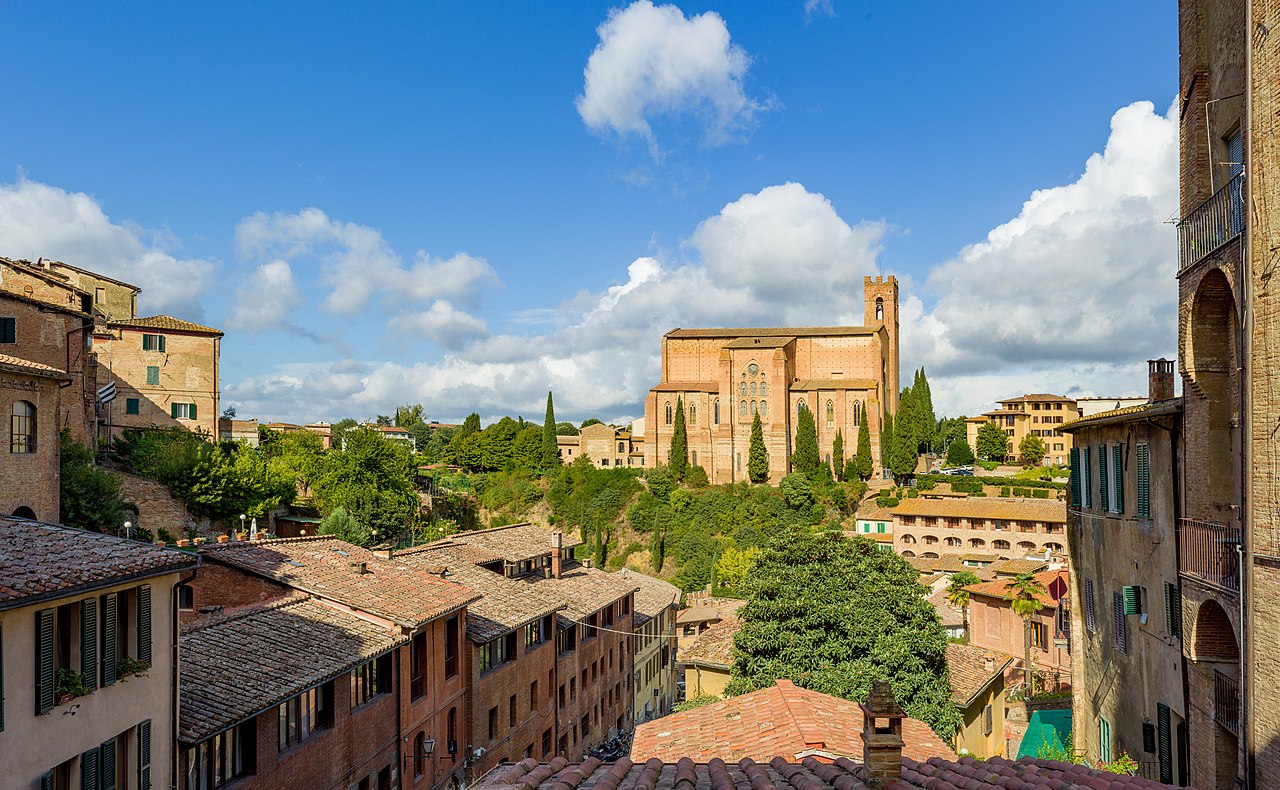
Siena's red-brick Dominican giant and the church of Saint Catherine

Basilica of San Domenico
Photo by Wolfgang Moroder / Wikimedia Commons / CC BY-SA 3.0 · Wikimedia Commons · CC BY-SA 3.0

6 min of listening · Section 1 of 5: Welcome to the Basilica of San Domenico

Prefer reading? The full guide is below

Here in person? Walk on with Mappu

This audio guide tells one place’s story. Walk Mode keeps going as you walk:

  • It knows where you are and talks about what’s in front of you, not only these chapters.
  • It takes you on to the next sight and follows what interests you.
  • Ask about anything you see, and it answers on the spot.
  • Your phone stays in your pocket.

A 2-hour live walk with Mappu, €4.99.

50 credits from the Starter pack. One-time purchase, no subscription.

Self-guided audio walk. No guide accompanies you. Not affiliated with the sites.

Keep exploring

Discover more places in Mappu.

Basilica of San Domenico • Section 1 of 5

Basilica of San Domenico: is there a free audio guide?

Quick answer. Yes. Mappu’s Basilica of San Domenico audio guide (Siena, Italy) is free in your browser: 5 sections and about 6 minutes of listening, in 6 languages. It covers “Bricks, Friars and a Long History”, “Reading the Architecture” and “Catherine's Church and Its Treasures”. In the Mappu app, Walk Mode narrates the places around you as you move and answers your follow-up questions.

Basilica of San Domenico map

Mappu's own map of the place, with the paths and entrances OpenStreetMap shows around it.

Basilica of San Domenico mapThe place on the map, with the guide's point marked.

Basilica of San Domenico: what does the audio guide cover?

  1. 01

    Welcome to the Basilica of San Domenico

    Welcome to the Basilica of San Domenico, one of the most important churches in Siena, in the heart of Tuscany. You are standing before a vast red-brick building on a hillock at the foot of the historic center, framed by houses that seem to climb the slope below the Cathedral. It is a stern, powerful sight, and it was meant to be. This church is also known as the Basilica Cateriniana, the Basilica of Catherine. The name honors Saint Catherine of Siena, who lived nearby and attended Mass here. Today the basilica holds several relics of her, which is why pilgrims and curious travelers alike come to this hill. Over the next few minutes we will look at how the church grew, what makes its architecture so austere, and how Catherine's story is woven through its chapels. We will also look at the artists whose work fills its walls. Take a breath, slow your pace, and let the building set the rhythm.

  2. 02

    Bricks, Friars and a Long History

    The basilica was built between 1226 and 1265, and it was enlarged during the fourteenth century. That is a long life, and it has not been a quiet one. Fires, military occupations and earthquakes have all left their mark, along with many later interventions and modifications. The result is an unmistakable Cistercian-Gothic look and an unusual relationship between the outside and the inside. This is Dominican architecture. Saint Dominic and Saint Francis had created a new way of living the religious life, well suited to the growing commercial cities. The imposing bulk of this church is a visual statement of how much influence the Dominican friars had in Catherine's Siena. The story did not stay on one track. Under the reforms of Grand Duke Leopold, the Dominican convent was suppressed, and in 1786 it became a Benedictine monastery of the Cassinese congregation. The Benedictines stayed until 1912. In 1920 the Dominicans were finally able to return to their church and convent, where they still live today.

  3. 03

    Reading the Architecture

    Look at the proportions. The interior follows an Egyptian cross plan, built around a single nave. The church is about 77 meters long and 30 meters wide, and it rises to about 27 meters at its highest point. Dominican builders favored a plain, open space where a large crowd could gather and listen to a preacher. The severe brick walls and the lack of decoration are part of that idea. Here is a curious detail about getting in. The entrance is on the left side of the church rather than at the front. Behind the façade stands the raised structure of the Chapel of the Vaults, so there is simply no room for a central doorway. The church adapts to its hillside site rather than hiding it. Inside, the chapel of Saint Thomas Aquinas lies to the left of the nave. On the right is the chapel of Saint Catherine of Siena, where her head relic is kept. Together they frame the two great figures of Dominican thought and devotion.

  4. 04

    Catherine's Church and Its Treasures

    Catherine's story is the beating heart of this basilica. Much of her mystical journey unfolded here, and her relic, the mummified head, rests in her chapel. Her head came back to Siena in a notable way. In 1385 her confessor Raymond informed the Consistory of the Republic of Siena that the head was in the city. A solemn procession then set out from the church of San Lazzaro, outside Porta Romana, and moved to this basilica. The relic was enclosed in a copper bust, which is now kept in a case to the right of the chapel entrance. The art here follows her story. Andrea Vanni's fresco of the saint is held to be a true likeness of the Sienese saint, since Vanni was one of her disciples. In the Chapel of the Vaults hangs a canvas of the solemn moment on 29 June 1461, when Pope Pius II, Enea Silvio Piccolomini of Siena, blessed his nephew Francesco Piccolomini, archbishop of Siena, after handing him the papal bull of canonization. The painting was commissioned by the Piccolomini family for their altar in the Basilica of San Francesco and was moved here in 1890. Sodoma painted two famous scenes beside the altar, in 1526: the Ecstasy and the Fainting of Saint Catherine. Elsewhere, look for Francesco di Giorgio's Adoration of the Shepherds, one of the few paintings by an artist better known as an architect. In the left transept, a chapel houses the Maestà by Guido da Siena, mentor of Duccio di Boninsegna.

  5. 05

    Before You Head Off

    The basilica has been part of Siena's life for centuries. The funeral of the painter Simone Martini was held here in 1344, and the church has welcomed friars, monks, pilgrims and artists ever since. Before you go, pause in the nave and notice how the silence feels. Many visitors describe the red-brick basilica as a place of contemplation. Then let your eyes travel from the severe walls to the glowing paintings in the chapels, and ask yourself how the two fit together. Outside, look back at the hillside and at the houses climbing below the Cathedral. Siena is full of stories like this one, and this hill is a good place to keep listening for the next.

About this guide

AI-generated from 6 sources; reviewed for accuracy and last updated on October 26, 2026. Verify tickets and opening hours on the official site.

Run a travel site or blog? Embed this audio guide for free.

Walk on from here

This place is stop 2 of 4 of a self-guided walk: Siena Old Town, Piazza Salimbeni to the Cathedral. About 1.4 km and 20 minutes on foot, plus about 26 minutes of listening.

Route map: walking on from Basilica of San Domenico4 numbered stops in walking order. Stop 1: Piazza Salimbeni; Stop 2: Basilica of San Domenico; Stop 3: Piazza del Campo; Stop 4: Siena Cathedral.Stop 1: Piazza Salimbeni1Stop 2: Basilica of San Domenico2Stop 3: Piazza del Campo3Stop 4: Siena Cathedral4
Distances are estimates along the walking route, from OpenStreetMap.

Indicative route. While you walk, watch where you're going, mind the traffic and follow local signs and rules. The map is an aid, not a safety guide. Terms

  1. Piazza Salimbeni

    about 0.4 km · about 6 min on foot

  2. Basilica of San DomenicoThis guide

    about 0.6 km · about 8 min on foot

  3. Piazza del Campo

    about 0.4 km · about 5 min on foot

  4. Siena Cathedral
Photo attribution

Walk Mode, in the free Mappu app: 2 hours for 50 credits (€4.99 Starter pack)

See the whole walk

Planning a trip to Siena?

Get your plan

Mappu sketches your days free in the chat, no account needed. Then take the full plan with you:

  • Weekend trip, €9.99: Your day-by-day plan plus 2 live walks
  • Save your trip’s free guides on your phone in the Mappu app: they play with no signal
See the trip packs

Already going? The 2-hour live walk in Siena is €4.99

More churches and basilicas with a free audio guide

Photo attribution

Plan your trip on a map and get an audio guide for almost any place nearby: just tap it on the Mappu map.

Common questions

Basilica of San Domenico: how long is the free audio guide?

About 6 minutes of listening in 5 sections: “Welcome to the Basilica of San Domenico”, “Bricks, Friars and a Long History”, “Reading the Architecture”, “Catherine's Church and Its Treasures”, and “Before You Head Off”.

What is the story behind the Basilica of San Domenico?

The basilica was built between 1226 and 1265, and it was enlarged during the fourteenth century. That is a long life, and it has not been a quiet one. Fires, military occupations and earthquakes have all left their mark, along with many later interventions and modifications. The result is an unmistakable Cistercian-Gothic look and an unusual relationship between the outside and the inside. This is Dominican architecture.

Basilica of San Domenico: what can I ask Mappu after the guide?

You can ask follow-up questions such as “Why is the basilica also called the Basilica Cateriniana, and how is Saint Catherine of Siena connected to the church?” and keep asking in Mappu, with the guide connected to your map and trip plan.
