Gushan Daitian Temple Audio Guide

A Hamasen temple of folk art, migrant faith and harbor-side memory

Gushan Daitian Temple
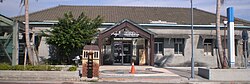
Photo by Deepblue5042Wikimedia CommonsCC BY-SA 4.0

5 min of listening · Section 1 of 5: Welcome to Gushan Daitian Temple

Prefer reading? The full guide is below

Here in person? Walk on with Mappu

This audio guide tells one place’s story. Walk Mode keeps going as you walk:

  • It knows where you are and talks about what’s in front of you, not only these chapters.
  • It takes you on to the next sight and follows what interests you.
  • Ask about anything you see, and it answers on the spot.
  • Your phone stays in your pocket.

A 2-hour live walk with Mappu, €4.99.

50 credits from the Starter pack. One-time purchase, no subscription.

Self-guided audio walk. No guide accompanies you. Not affiliated with the sites.

Keep exploring

Discover more places in Mappu.

Gushan Daitian Temple • Section 1 of 5

Gushan Daitian Temple: is there a free audio guide?

Quick answer. Yes. Mappu’s Gushan Daitian Temple audio guide (Kaohsiung, Taiwan) is free in your browser: 5 sections and about 5 minutes of listening, in 8 languages. It covers “From Beimen to Hamasen: A Temple Born of Migration”, “A Gallery of Master Craftsmen” and “Two Halls, One Hillside Neighborhood”. In the Mappu app, Walk Mode narrates the places around you as you move and answers your follow-up questions.

Gushan Daitian Temple map

Mappu's own map of the place, with the paths and entrances OpenStreetMap shows around it.

Gushan Daitian Temple mapThe place on the map, with the guide's point marked.

Gushan Daitian Temple: what does the audio guide cover?

  1. 01

    Welcome to Gushan Daitian Temple

    Welcome to Gushan Daitian Temple, a temple in the Hamasen neighborhood of Gushan District, in the port city of Kaohsiung, southern Taiwan. You may also hear it called Hamasen Temple, and its address is on Gupo Street. The name in Chinese is Gushan Daitian Gong, and Daitian is the name of the temple's tradition, one that traces back to Tainan. This is a place where a harbor neighborhood, a migrant story and a remarkable collection of folk art all meet. The temple is a Taoist hall at the front, with a Buddhist hall called Qingyun Temple at the back, and both are richly decorated. Over the next few minutes we will look at how the temple began, at the artists whose hands shaped it, and at the lively waterfront district around it. Take a moment to settle in, look up at the rooflines and the painted surfaces, and let the story come to you.

  2. 02

    From Beimen to Hamasen: A Temple Born of Migration

    The story of this temple begins with people on the move. During the period of Japanese rule, in the fifth year of the Showa era, families from what is now Beimen District in Tainan relocated to the Hamasen area to make a living. They did not arrive empty-handed. They carried their traditional beliefs with them, and they brought the deity Master Cingshuei from his original home at Baoan Temple to Kaohsiung, as a source of spiritual comfort in a new place. In 1949, devotees gathered to discuss building a temple that could enshrine all their deities together. They invited two figures to lead the conversation: Wufuciansuei from Nankunshen Daitian Temple in Beimen, and Chifuciansuei from Keliao Baoan Temple. Wufuciansuei then designated the building site, and the new temple took the name Kaohsiung Daitian Temple. It was dedicated to Wufuciansuei of Nankunshen Daitian Temple, Chifuciansuei of Keliao Baoan Temple, and Master Cingshuei. The temple was built in 1951 on a site that had once been home to Shuangye Elementary School. So the place where children once studied became the place where a community of newcomers gathered to worship.

  3. 03

    A Gallery of Master Craftsmen

    Daitian Temple is often described as a museum of folk art that happens to be a place of worship, and the reason is the list of masters who worked here. During its construction and later reconstruction, the temple commissioned celebrated artists. Pan Li-shui created colored drawings. Su Shui-qin carved the wood. Cai Yuan-heng contributed calligraphy. Ye Jin-yi made cochin ware, the colorful ceramic work used to decorate temple roofs. Stone sculptures were made based on drawings by Chen Yu-feng. Pan Lishui is the name to remember. This temple holds the largest collection of his work of any such structure in Taiwan, including a massive landscape mural. As you look at the painted panels, remember that painted temple art is a kind of storytelling. Each scene is a picture meant to be read, and the painter works with the same care as a storyteller choosing words. This artistic and historical value is why the Kaohsiung City Government named Gushan Daitian Temple a heritage site in 2009.

  4. 04

    Two Halls, One Hillside Neighborhood

    One of the most interesting things about the layout is the pairing of two traditions under one roof. At the front stands a Taoist hall, and at the back a Buddhist hall known as Qingyun Temple. Both are richly decorated with folk art, so as you move through the compound you pass from one religious tradition to another without leaving the same decorative world. Then step back and consider the neighborhood. Hamasen is part of Gushan District, which has a long record of encounters with the wider world. Not far away, the Former British Consulate, built in 1865 during the Qing Dynasty, stands on a small hilltop overlooking Sizihwan Bay. It was the first consulate and the first Western-style house built by the British in Taiwan. Down by the water you will find Pier 12, the Love Pier, along with the Gushan Ferry Terminal and Fisherman's Wharf. There are walkways, bike paths, cafes and beer gardens. A temple rooted in the memory of migrants from Tainan, set beside a harbor that has welcomed the world, makes the area feel layered in time.

  5. 05

    Before You Head Off

    As you leave, try looking at the temple the way its founders might have. Think of families who carried a deity from Beimen to a harbor district, then gave that deity a home on the grounds of a former school. Before you go, look closely at the details that were made by hand: the carved wood, the painted scenes, the calligraphy and the stonework. See if you can spot the difference between the front hall and the hall at the back. Then let the waterfront walkways nearby carry you onward, perhaps toward the old consulate on its hilltop, and see how many layers of Kaohsiung's story you can find in one short stroll.

About this guide

AI-generated from 6 sources; checked automatically and last updated on November 1, 2026. Verify tickets and opening hours on the official site. Independent guide by Mappu. Not affiliated with or endorsed by the site or its managers.

Run a travel site or blog? Embed this audio guide for free.

Walk on from here

The nearest places with a Mappu audio guide, in walking order: about 1.7 km and 25 minutes on foot in all.

Route map: walking on from Gushan Daitian Temple5 numbered stops in walking order. Stop 1: Gushan Daitian Temple; Stop 2: Kaohsiung Wude Hall; Stop 3: Kaohsiung Martyrs' Shrine; Stop 4: Takao Railway Museum; Stop 5: Hamasen Museum of Taiwan Railway.Stop 1: Gushan Daitian Temple1Stop 2: Kaohsiung Wude Hall2Stop 3: Kaohsiung Martyrs' Shrine3Stop 4: Takao Railway Museum4Stop 5: Hamasen Museum of Taiwan Railway5
Distances are estimates: the straight line between places plus 30%.

Indicative route. While you walk, watch where you're going, mind the traffic and follow local signs and rules. The map is an aid, not a safety guide. Terms

  1. Gushan Daitian TempleThis guide

    about 0.4 km · about 5 min on foot

  2. Kaohsiung Wude Hall

    about 0.3 km · about 4 min on foot

  3. Kaohsiung Martyrs' Shrine

    about 0.7 km · about 10 min on foot

  4. Takao Railway Museum

    about 0.3 km · about 4 min on foot

  5. Hamasen Museum of Taiwan Railway
Photo attribution

Walk Mode, in the free Mappu app: 2 hours for 50 credits (€4.99 Starter pack)

Planning a trip to Kaohsiung?

Get your plan

Mappu sketches your days free in the chat, no account needed. Then take the full plan with you:

  • Weekend trip, €9.99: Your day-by-day plan plus 2 live walks
  • Save your trip’s free guides on your phone in the Mappu app: they play with no signal
See the trip packs

Already going? The 2-hour live walk in Kaohsiung is €4.99

Plan your trip on a map and get an audio guide for almost any place nearby: just tap it on the Mappu map.

Common questions

Gushan Daitian Temple: how long is the free audio guide?

About 5 minutes of listening in 5 sections: “Welcome to Gushan Daitian Temple”, “From Beimen to Hamasen: A Temple Born of Migration”, “A Gallery of Master Craftsmen”, “Two Halls, One Hillside Neighborhood”, and “Before You Head Off”.

Gushan Daitian Temple: what can I ask Mappu after the guide?

You can ask follow-up questions such as “How did families from Beimen in Tainan bring their beliefs to Hamasen, and what did the founders of the temple decide in 1949?” and keep asking in Mappu, with the guide connected to your map and trip plan.