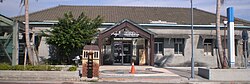
Let's begin with that word, Hamasen. It is not Chinese in origin. It is the Japanese word for beach line, pronounced ha-ma-sen. Railway history in Kaohsiung begins in 1900, which the city treats as its railway year. The first station, called Takao Station, stood roughly where the railway park's inspection sheds and signal building are today. Beyond it to the south lay a lagoon and tidal flats. As rail traffic grew, the station ran out of room, so land was reclaimed from the sea to the south. In 1905, a track more than 500 meters long was pushed out across that new land. It was called the beach line, and locals gradually turned its Japanese pronunciation into the neighborhood's name. In other words, a railway siding gave an entire district its name. The station itself kept moving south and changing names. In 1908 it was extended to the spot of the old Takao Station, and in 1920 an administrative reform renamed it Kaohsiung Station. Later, when the main station moved, the original became Kaohsiung Port Station. That is the story the museum's miniatures begin with: they start from Takao, in Hamasen, and then spread across the island.