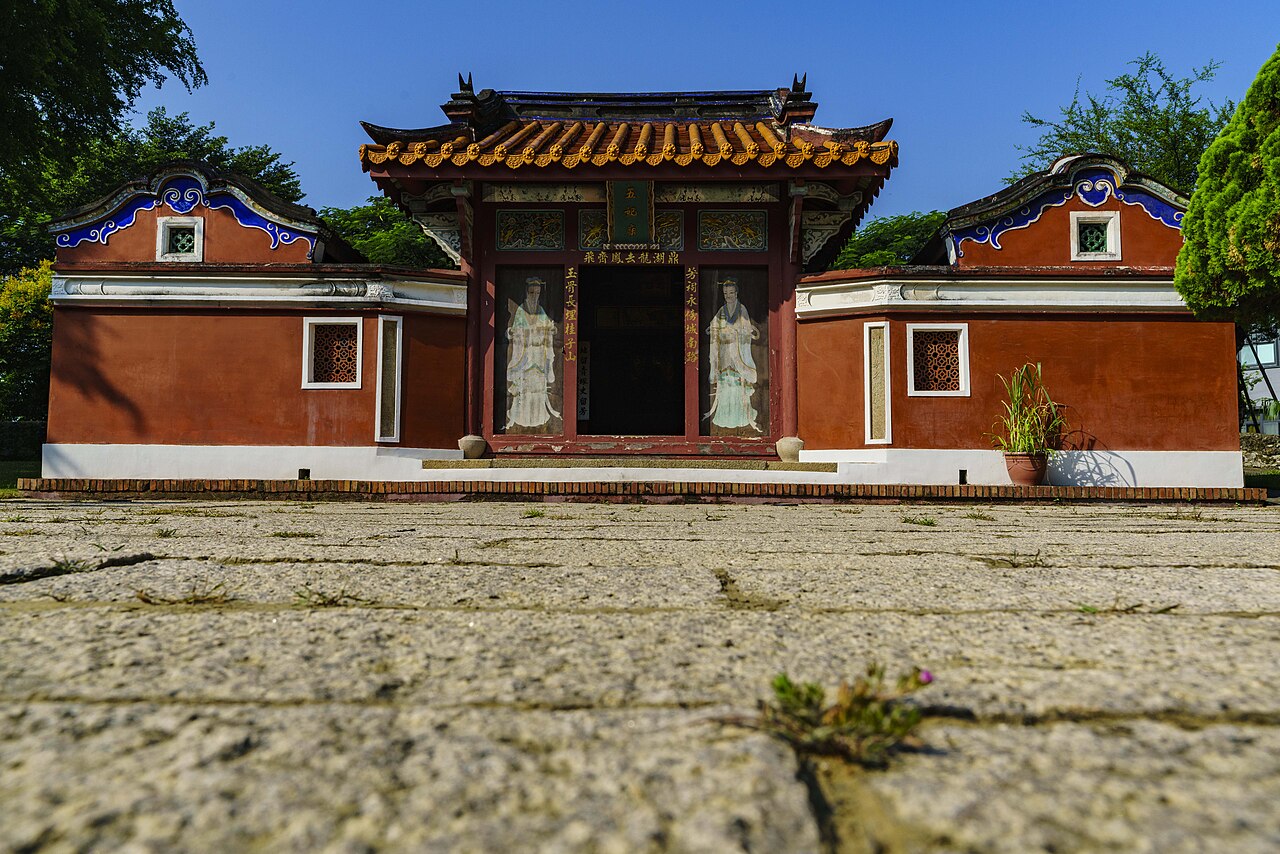
Let us go back to 1683. The Qing admiral Shi Lang had defeated the Zheng forces at Penghu, and the Zheng regime on Taiwan was collapsing. Prince Ningjing, Zhu Shuguei, understood that the cause was lost. He gathered the women of his household and told them they were young and should plan their own futures. They refused. The five replied, in the words handed down in the record, that if the prince kept his honor they would rather lose their lives than their loyalty, and that where he lived they would live, and where he died they would die. One after another they hanged themselves in the central hall of the prince's residence. Zhu Shuguei prepared their bodies himself and buried them outside the south gate of the city, on a hill called Kuidou. Afterward he bade farewell to old friends and to Zheng Keshuang, who was seeking terms of surrender, and took his own life. Two attendants of the household, eunuchs, are said to have followed their master in death as well. Their remains were laid near the five ladies, and a tiny shrine for them, the Yiling Jun shrine, still stands beside the temple. Later generations read the whole episode as a model of loyalty and fidelity, which is why the place was remembered long after the regime vanished.