Shinjuku Gyo-en Audio Guide

Audio guide for Shinjuku Gyo-en

Shinjuku Gyoen
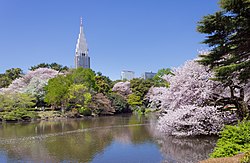
Photo by KakidaiWikimedia CommonsCC BY-SA 3.0

7 min of listening · Section 1 of 5: Welcome to Shinjuku Gyoen National Garden

Prefer reading? The full guide is below

Here in person? Walk on with Mappu

This audio guide tells one place’s story. Walk Mode keeps going as you walk:

  • It knows where you are and talks about what’s in front of you, not only these chapters.
  • It takes you on to the next sight and follows what interests you.
  • Ask about anything you see, and it answers on the spot.
  • Your phone stays in your pocket.

A 2-hour live walk with Mappu, €4.99.

50 credits from the Starter pack. One-time purchase, no subscription.

Self-guided audio walk. No guide accompanies you. Not affiliated with the sites.

Keep exploring

Discover more places in Mappu.

Shinjuku Gyoen • Section 1 of 5

Shinjuku Gyoen: is there a free audio guide?

Quick answer. Yes. Mappu’s Shinjuku Gyo-en audio guide (Tokyo, Japan) is free in your browser: 5 sections and about 7 minutes of listening, in 8 languages. It covers “Shinjuku Gyoen National Garden: From Samurai Estate to Experimental Farm”, “Shinjuku Gyoen National Garden: The Imperial Garden and Fukuba Hayato” and “Shinjuku Gyoen National Garden: Buildings, Greenhouse and Landscapes to Look For”. In the Mappu app, Walk Mode narrates the places around you as you move and answers your follow-up questions.

Shinjuku Gyo-en map

Mappu's own map of the place, with the paths and entrances OpenStreetMap shows around it.

Shinjuku Gyo-en mapThe place on the map, with the guide's point marked.

Shinjuku Gyoen: what does the audio guide cover?

  1. 01

    Welcome to Shinjuku Gyoen National Garden

    Welcome to Shinjuku Gyoen National Garden, known in Japanese as 新宿御苑. You are in one of Tokyo's great green spaces, spread across Shinjuku Ward and Shibuya Ward and managed today by the Ministry of the Environment. It covers roughly 583,000 square meters, a huge pocket of lawns, ponds, greenhouses and tall trees in the middle of one of the busiest districts on earth. What makes this garden special is that it is really three gardens in one: a European-style formal garden, an English-style landscape garden and a Japanese garden, all woven together. It is considered a leading example of a modern Western-style garden from the Meiji era, and one of the few great landscape gardens of its kind in Japan. Over the next few stops we will follow its story from a feudal lord's estate, through an experimental farm and a royal garden, to the public park you can walk through today. Take a slow breath and let the city noise fade as we begin.

  2. 02

    Shinjuku Gyoen National Garden: From Samurai Estate to Experimental Farm

    The roots of this garden go back to 1591, the year after Tokugawa Ieyasu entered Edo. His loyal retainer Naito Kiyonari, the second head of the Naito family, was rewarded for long service and for guarding the western gate of Edo Castle with a residence on the land that is now Shinjuku. Tradition says Ieyasu offered him as much land as he could ride a horse around. The story goes that the ride took in Yotsuya to the east, Yoyogi to the west, Sendagaya to the south and Okubo to the north. Treat that as a cherished tradition rather than a measured survey. The site was a strategic one, near where the roads running west from Edo met the old Kamakura road. In the Edo period the grounds served as a lower residence of the Naito family, lords of Takato in Shinano. After the Meiji Restoration the Finance Ministry bought the Naito estate and surrounding land, about 59 hectares in all, and in 1872 opened the Naito Shinjuku Experimental Station to improve livestock and horticulture. The next year its work passed to the Home Ministry, led by Okubo Toshimichi. Plants from Japan and abroad were gathered to test how well they grew.

  3. 03

    Shinjuku Gyoen National Garden: The Imperial Garden and Fukuba Hayato

    In 1877 the experimental station opened an agricultural school with European instructors. The next year it moved to Komaba and became the Komaba Agricultural School, a forerunner of the agriculture faculties of the University of Tokyo and of Tokyo University of Agriculture and Technology. Then, in 1879, the Shinjuku Botanical Garden opened, under the care of the Imperial Household Ministry. The man most tied to the garden's growth is Fukuba Hayato. Born in Iwami, today's Shimane Prefecture, he was adopted at sixteen by a scholar of national learning and came to Tokyo. He studied modern Western agriculture at the Gakunosha school, founded by Tsuda Sen, and in 1877 became a trainee at the Naito Shinjuku station. He joined the staff when the botanical garden began and stayed with it for nearly 40 years. He was later given a title of nobility in 1907 and a doctorate in agriculture in 1919. In 1906 the garden was reborn as an imperial garden. Its opening ceremony, which also celebrated the Russo-Japanese War, was attended by Emperor Meiji, and it was formally named Shinjuku Gyoen. The formal and landscape gardens were designed by a French landscape designer. For decades it was used mainly for imperial garden parties and as a palace garden for receiving guests from Japan and abroad.

  4. 04

    Shinjuku Gyoen National Garden: Buildings, Greenhouse and Landscapes to Look For

    Look for the Former Imperial Rest House. It was built in 1896 as a resting place for the Emperor and members of the imperial family when they came to admire the garden's greenhouse. It was enlarged to its present size in 1924 and used as a clubhouse. Designed by the Imperial Household Ministry's architecture office, it is based on the American Stick Style and has been an Important Cultural Property since 2001. Nearby is the Former Goryotei, a pavilion by the water used as a cool summer retreat. It was a gift from Taiwan to mark the wedding of the future Showa Emperor. You can also find the excavated remains of an early greenhouse, built between 1893 and 1914 and uncovered in 2010. Its cut stone and brick show how greenhouses were built in that era. The modern greenhouse stands near the Okido Gate and covers 2,750 square meters. It shows tropical plants from mountain regions and lowlands, and subtropical plants from Okinawa and the Ogasawara Islands. The garden grows about 2,700 species, many of them tropical or subtropical, and it also works to conserve endangered plants. Out on the grass, the English landscape garden is the largest of the three, a wide lawn ringed by tall trees. The garden's symbol tree is the tulip tree, rising over 30 meters, with soft yellow-green flowers around May. If you want the whole story indoors, a permanent exhibition facility tells four centuries of the garden's history with immersive projections and displays on the greenhouse, the cherry and chrysanthemum blossoms, and the imperial garden era.

  5. 05

    Before You Head Off

    After the Second World War the gates opened to everyone. In 1949 this former imperial garden became a national garden, and it has belonged to the public ever since. Even the old main gate in the southeast tells a story. It was built to welcome the imperial family and distinguished guests, and it stays closed for everyday visitors. It is still opened for official state occasions, while the entrances you use today were placed where the train lines are convenient. As you wander, notice how the garden changes character. Watch where the geometry of the formal garden gives way to rolling lawn, and where that lawn gives way to the quiet of the Japanese garden. See if you can spot where the Edo-era estate, the experimental farm and the imperial garden each left their mark. And look up at the great old trees. They are well over a century old and are carefully tended for the garden's future. What will you find around the next bend?

About this guide

AI-generated from 6 sources; checked automatically and last updated on October 31, 2026. Verify tickets and opening hours on the official site. Independent guide by Mappu. Not affiliated with or endorsed by the site or its managers.

Run a travel site or blog? Embed this audio guide for free.

Walk on from here

This place is stop 5 of 5 of a self-guided walk: Kabukicho to Shinjuku Gyoen, Tokyo. About 1.7 km and 25 minutes on foot, plus about 29 minutes of listening.

Route map: walking on from Shinjuku Gyoen5 numbered stops in walking order. Stop 1: Kabukichō; Stop 2: Shinjuku Golden Gai; Stop 3: Hanazono Jinja Shrine; Stop 4: Shinjuku Ni-chōme; Stop 5: Shinjuku Gyoen.Stop 1: Kabukichō1Stop 2: Shinjuku Golden Gai2Stop 3: Hanazono Jinja Shrine3Stop 4: Shinjuku Ni-chōme4Stop 5: Shinjuku Gyoen5
Distances are estimates along the walking route, from OpenStreetMap.

Indicative route. While you walk, watch where you're going, mind the traffic and follow local signs and rules. The map is an aid, not a safety guide. Terms

  1. Kabukichō

    about 0.4 km · about 6 min on foot

  2. Shinjuku Golden Gai

    about 0.1 km · about 2 min on foot

  3. Hanazono Jinja Shrine

    about 0.5 km · about 7 min on foot

  4. Shinjuku Ni-chōme

    about 0.6 km · about 8 min on foot

  5. Shinjuku GyoenThis guide

Photo attribution

Walk Mode, in the free Mappu app: 2 hours for 50 credits (€4.99 Starter pack)

See the whole walk

Planning a trip to Tokyo?

Get your plan

Mappu sketches your days free in the chat, no account needed. Then take the full plan with you:

  • Weekend trip, €9.99: Your day-by-day plan plus 2 live walks
  • Save your trip’s free guides on your phone in the Mappu app: they play with no signal
See the trip packs

Already going? The 2-hour live walk in Tokyo is €4.99

Plan your trip

Photo attribution
  • Japan First Trip 10-Day Itinerary: Stefan K
  • Tokyo 3-Day Itinerary: Alex

Plan your trip on a map and get an audio guide for almost any place nearby: just tap it on the Mappu map.

Common questions

Shinjuku Gyo-en: how long is the free audio guide?

About 7 minutes of listening in 5 sections: “Welcome to Shinjuku Gyoen National Garden”, “Shinjuku Gyoen National Garden: From Samurai Estate to Experimental Farm”, “Shinjuku Gyoen National Garden: The Imperial Garden and Fukuba Hayato”, “Shinjuku Gyoen National Garden: Buildings, Greenhouse and Landscapes to Look For”, and “Before You Head Off”.

Shinjuku Gyo-en: what can I ask Mappu after the guide?

You can ask follow-up questions such as “How did the Naito family's estate in Edo shape the land that became this garden?” and keep asking in Mappu, with the guide connected to your map and trip plan.