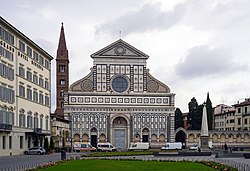
Pisa Cathedral Audio Guide

Pisa's Romanesque Cathedral in Piazza del Duomo

Pisa Cathedral
Photo by Saffron Blaze / Wikimedia Commons / CC BY-SA 3.0 · Wikimedia Commons · CC BY-SA 3.0

6 min of listening · Section 1 of 5: Welcome to Cattedrale di Santa Maria Assunta

Prefer reading? The full guide is below

Keep exploring

Discover more places in Mappu, or start Walk Mode when you’re there.

Live Walk Mode: 2 hours for 50 credits (€4.99 Starter pack)
Pisa Cathedral • Section 1 of 5

Pisa Cathedral: is there a free audio guide?

Quick answer. Yes. Mappu’s Pisa Cathedral audio guide (Pisa, Italy) is free in your browser: 5 sections and about 6 minutes of listening, in 6 languages. It covers “Built on Victory: The Founding of the Duomo”, “Stripes, Spoils and a Bronze Griffon” and “Fire, Bronze and Cimabue's Mosaic”. In the Mappu app, Walk Mode narrates the places around you as you move and answers your follow-up questions.

Pisa Cathedral: what does the audio guide cover?

  1. 01

    Welcome to Cattedrale di Santa Maria Assunta

    Welcome to the Duomo of Pisa, standing in Piazza del Duomo, the square the Italians call Piazza dei Miracoli, the Square of Miracles. Officially this is the Primatial Metropolitan Cathedral of the Assumption of Mary, and it is a medieval Catholic cathedral dedicated to the Assumption of the Virgin Mary. Most visitors arrive with their eyes fixed on the famous leaning bell tower, but the cathedral is the oldest of the three great structures in the square. The Baptistry and the Campanile, the Leaning Tower, came after it. In other words, the cathedral set the tone for everything else you see here. It is a masterpiece of Pisan Romanesque architecture, built when Pisa was a maritime republic at the height of its commercial and political power. Over the next few minutes we will look at how it began, what its striped marble walls are saying, and what survived the terrible fire of 1595. We will end with a ray of sunlight that is worth planning a visit around.

  2. 02

    Built on Victory: The Founding of the Duomo

    The ground under your feet has a long past. The site had already been used as a necropolis in the Lombard era, and at the beginning of the eleventh century a church dedicated to Santa Maria was begun here but never finished. The cathedral you see today was founded in ten sixty-four. The architect was Buscheto, and the money is said to have come from a tenth part of the booty from Pisa's expedition against the Muslims at Palermo in Sicily, in that same year. Buscheto worked on the building between ten sixty-four and eleven ten. He gave it its original plan: a basilica with five naves, a projecting transept with three naves, and a dome over the crossing. At first the great new church was called Santa Maria Maggiore, before it was definitively named Santa Maria Assunta. Its status grew quickly. In ten ninety-two Pope Urban the Second gave Archbishop Daiberto the title of primate, and the church went from being a simple cathedral to a primatial one. Today that honor is only formal. Look at the facade too, because inscriptions there record that the cathedral was raised by the will of the citizens and the bishop, at a moment when the city was at its peak.

  3. 03

    Stripes, Spoils and a Bronze Griffon

    Step back and read the outside as Pisa wanted it to be read. The walls are decorated in alternating black and white stripes of Arab influence. They also make heavy use of materials reused from Roman monuments, which spoke of the greatness of the city. Pisa saw itself as altera Roma, another Rome. The decoration keeps pointing across the Mediterranean. You can find lozenge patterns, an elliptical dome, and on top of the roof a bronze griffon of Islamic manufacture. The result is a building that feels both extraordinarily new and deeply ancient. Stylistically it fuses classical, Lombard and Emilian, and Byzantine elements. The apse is a triumph of colors and play of lines, and it converses with the nearby Leaning Tower. This Pisan Romanesque style did not stay in the square. It was adopted in other churches in Pisa and in Lucca, such as San Paolo a Ripa d'Arno and the cathedral of San Martino in Lucca.

  4. 04

    Fire, Bronze and Cimabue's Mosaic

    Inside, five naves are divided by monolithic granite columns from the island of Elba. The arches of the side naves show a Moorish taste so strong that the cathedral was often compared to the great Mosque of Cordoba. The nave is covered by a wooden coffered ceiling, which replaced the original exposed trusses in the seventeenth century. That change followed disaster. In 1595 a fire heavily damaged the church, and much of the medieval decoration was lost. The three bronze doors on the facade were made after the fire, by the workshop of Giambologna. The one great door that escaped is the Gate of Saint Rainerius, cast around eleven eighty by Bonanno Pisano and decorated with 24 panels of New Testament stories. It opens in the south transept facing the bell tower, and from the beginning the faithful used it. For townspeople coming along via Santa Maria, it was the shortest way in. The fire also spared remarkable works from the early fourteenth century. In the apse mosaic of Christ Pantocrator, Cimabue painted the figure of Saint John the Evangelist around 1302. Giovanni Pisano's Gothic pulpit, begun in 1302, carries scenes from the life of Christ. You can also find the sepulchral monument to Emperor Henry the Seventh, from 1315.

  5. 05

    Before You Head Off

    Here is one last detail that turns the cathedral into a clock. Twice a year, a ray of sunlight enters through a window above the altar dedicated to Saint Rainerius at Pisan solar noon. It happens on the day of the equinox, and again on the twenty-fifth of March, which in the old Pisan calendar was New Year's Day. Today those moments fall at 27 minutes past 12 in standard time, or 27 minutes past one when daylight saving time is in force. This is still a working cathedral, and the feast of the Assumption of Mary on the fifteenth of August, the day it is dedicated to, is its most important celebration. As you step back into the square, look again at the striped walls, the griffon on the roof and the bronze doors. See how many cultures and centuries you can read in them, and then let your eyes drift to the Baptistry and the Leaning Tower, which came after the cathedral.

About this guide

AI-generated from 6 sources; checked automatically and last updated on October 23, 2026. Verify tickets and opening hours on the official site.

Run a travel site or blog? Embed this audio guide for free.

Useful for your visit

Tickets, tours and practical extras for this trip, from Mappu's partners.

Partner links (Airalo, Amazon, Booking.com, GetYourGuide, Klook, Tiqets, Trip.com, Viator, Welcome Pickups): if you book or buy through them, Mappu may earn a commission, at no extra cost to you.

More cathedrals with a free audio guide

Photo attribution

Plan your trip on a map and get an audio guide for almost any place nearby: just tap it on the Mappu map.

Common questions

Pisa Cathedral: how long is the free audio guide?

About 6 minutes of listening in 5 sections: “Welcome to Cattedrale di Santa Maria Assunta”, “Built on Victory: The Founding of the Duomo”, “Stripes, Spoils and a Bronze Griffon”, “Fire, Bronze and Cimabue's Mosaic”, and “Before You Head Off”.

Pisa Cathedral: what can I ask Mappu after the guide?

You can ask follow-up questions such as “How did Pisa's expedition to Palermo help pay for the cathedral that Buscheto began in ten sixty-four?” and keep asking in Mappu, with the guide connected to your map and trip plan.