


Trulli of Alberobello: how long is the free audio guide?
About 7 minutes of listening in 5 sections: “Welcome to Rione Monti”, “The Art of the Tax Dodge”, “Symbols and Signatures in the Sky”, “The Church of the Cones”, and “Beyond the Beaten Path”.
Quick answer. Yes. Mappu’s Trulli of Alberobello audio guide (Alberobello, Italy) is free in your browser: 5 sections and about 7 minutes of listening, in 8 languages. It covers “The Art of the Tax Dodge”, “Symbols and Signatures in the Sky” and “The Church of the Cones”. In the Mappu app, Walk Mode narrates the places around you as you move and answers your follow-up questions.
Last verified October 11, 2026. Sources: viaggiareinpuglia.
Mappu's own map of the place, with the paths and entrances OpenStreetMap shows around it.
Welcome to the heart of Alberobello, specifically the Rione Monti district. As you stand here, you are surrounded by a landscape so unique that the United Nations Educational, Scientific and Cultural Organization declared it a World Heritage Site in 1996. Looking around, you will see over 1,000 limestone dwellings known as trulli cascading down the hillside. These whitewashed walls and gray conical roofs look like something plucked straight from the pages of a fairytale, but they are very much real and still inhabited today. Rione Monti is the commercial and most famous heartbeat of the town, where history and present-day life blend together in every stone. As you begin your walk uphill, take a moment to notice how the narrow streets follow the natural curve of the land, leading you deeper into an architectural wonder that exists nowhere else on Earth.
You might wonder why anyone would build a house using only dry stones without a single drop of mortar or cement. The answer is a clever bit of medieval tax evasion. In the fifteenth century, the local feudal lords, the Counts of Conversano, ordered their peasants to build houses that could be dismantled in a hurry. Why? Because the King of Naples imposed a heavy tax on every new permanent settlement. Whenever the royal tax inspectors were spotted on the horizon, the residents would simply pull out the main keystone, and the entire house would collapse into a heap of rubble, making it look like an unfinished pile of stones rather than a taxable home. This ancient dry stone technique, known as pietra a secco in Italian, created incredibly sturdy structures with double-skin walls filled with rubble, providing natural insulation that keeps these homes cool during the hot Puglian summers and warm in the winter.
Look up at the gray conical roofs, and you will notice mysterious white symbols painted on many of them. These are not just for decoration; they are protective talismans. There are 18 main symbols categorized into three groups: primitive, Christian, and magical or astrological. You might spot a sun, a heart pierced by an arrow, or various planetary signs, all intended to ward off evil spirits and bring good luck to the family inside. At the very top of each cone is a stone ornament called a pinnacle, or pinnacolo. These often serve as the unique signature of the trullaro, the master stonemason who built the house. Each one is slightly different—some are spheres, some are discs, and some are stars—reflecting a deep sense of pride in local craftsmanship that has been passed down through generations of builders who never used a single blueprint.
As you reach the top of the hill in Rione Monti, you will encounter one of the most unusual sights in Italy: the Church of Saint Anthony of Padua. Built in 1927, it is the only trullo-style church in the world. It was constructed specifically to blend in with the local architecture because the district had already been protected as a national monument since 1910, meaning no modern-style buildings were allowed. The church features a central dome that stands 21 meters high, shaped exactly like a giant trullo roof. For a practical pointer, if you want the best view for your photos, head away from the church to the Belvedere Santa Lucia. This viewpoint offers a breathtaking panorama where the hundreds of gray cones look like a field of stone mushrooms sprouting from the hillside. Accessibility is best around the main streets like Largo Martellotta, but be prepared for some steep climbs as you explore deeper into the neighborhood.
While Rione Monti is bustling with artisan shops and cafes, do not forget that it is only half of the story. Across the main road lies another district called Aia Piccola. It is much quieter, with around 400 trulli, and is still largely a residential area. If you want to see how locals truly lived, compare the lively energy here with the hushed, authentic atmosphere over there. As you continue your stroll, reach out and touch the rough, sun-warmed limestone. These stones have survived centuries of history, from tax-evading peasants to worldwide fame. Perhaps you will find yourself ducking into a small doorway to taste some local taralli or a glass of Primitivo wine, but for now, just let your curiosity guide you through these white stone labyrinths and see what hidden alleys you might discover next.
AI-generated from 15 sources; checked automatically and last updated on May 29, 2026. Verify tickets and opening hours on the official site. Independent guide by Mappu. Not affiliated with or endorsed by the site or its managers.
Planning a trip to Alberobello?
Mappu sketches your days free in the chat, no account needed. Then take the full plan with you:
Tickets, tours and practical extras for this trip, from Mappu's partners.
Partner links (Airalo, Amazon, Booking.com, GetYourGuide, Klook, Tiqets, Trip.com, Viator, Welcome Pickups): if you book or buy through them, Mappu may earn a commission, at no extra cost to you.
 Trullo Sovrano Alberobello
 Ostuni Puglia
 The Sassi di Matera and Via Muro Matera
 Palombaro Lungo Matera
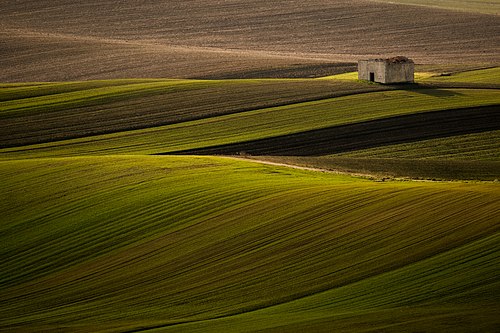 Castel del Monte Puglia
 Trani Cathedral Trani
Plan your trip on a map and get an audio guide for almost any place nearby: just tap it on the Mappu map.
About 7 minutes of listening in 5 sections: “Welcome to Rione Monti”, “The Art of the Tax Dodge”, “Symbols and Signatures in the Sky”, “The Church of the Cones”, and “Beyond the Beaten Path”.
You can ask follow-up questions such as “How exactly did the residents dismantle the trulli houses to avoid taxes?” and keep asking in Mappu, with the guide connected to your map and trip plan.