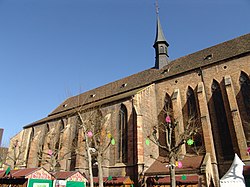
From the very beginning, the Koïfhus had a double function. The ground floor was for storage and for taxing goods that came into the town or went out of it. Picture carts, barrels and bundles being weighed and assessed under these arches, with officials making sure the town got its share. The upper floor served a different purpose, and it was politically important. It hosted the meetings of the deputies of the Decapole, a federation of 10 imperial towns of Alsace. Colmar was one of them, alongside towns such as Sélestat, Obernai, Kaysersberg, Munster and Turckheim. Delegates came here to settle the federation's shared business. The building also accommodated meetings of Colmar's own magistrates. This pairing of money below and power above is what makes the Koïfhus special. Trade and government sat in one building, one on top of the other.