
Ribeira: how long is the free audio guide?
About 6 minutes of listening in 5 sections: “Welcome to Ribeira”, “A Square With Medieval Roots”, “The Tragedy of the Bridge of Boats”, “Decline and Rebirth”, and “Before You Head Off”.
Audio guide for Ribeira

Quick answer. Yes. Mappu’s Ribeira audio guide (Porto, Portugal) is free in your browser: 5 sections and about 6 minutes of listening, in 6 languages. It covers “A Square With Medieval Roots”, “The Tragedy of the Bridge of Boats” and “Decline and Rebirth”. In the Mappu app, Walk Mode narrates the places around you as you move and answers your follow-up questions.
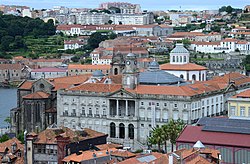
Welcome to Ribeira, the riverside heart of Porto, with Praça da Ribeira, Ribeira Square, as your starting point. A quick word on what this guide covers: the square itself has few detailed records, so I will tell you the story of the Ribeira district around it, and I will say clearly when we are talking about the square in particular. Ribeira sits in the parish of São Nicolau, right beside the Douro River, and it belongs to Porto's historic centre, a World Heritage Site. It is counted among the oldest and most characteristic corners of the city. Look around and you will see narrow winding streets, arcades, old colorful houses, and the river with Vila Nova de Gaia rising on the opposite bank. For centuries this was where Porto met the water, and the water meant trade. Over the next few minutes we will follow that thread, from medieval merchants to a famous bridge disaster, to a long decline, and to the lively revival you can feel around you today.
Let us start with the square under your feet. Praça da Ribeira is one of the oldest squares in Porto, and it already appears in old documents from the year 1389. Locals have an affectionate nickname for it too: the square of the cube. The wider district was a bustling commercial hub from medieval times, thanks to its closeness to the river. Merchants and sailors steered their boats up the Douro looking for new trade opportunities and connections with partners in Europe and Africa. Some accounts trace Ribeira's origins back to the Roman era, though it truly flourished in the Middle Ages, as Porto became a major maritime trading town. A few steps away stands one of the district's best-known stories. Casa do Infante is the house where Prince Henry the Navigator is believed to have been born, in 1394. Not far from it, Rua da Fonte Taurina counts among the oldest streets in the city, and the Muro dos Bacalhoeiros, the wall of the cod merchants, still recalls the trades that once filled these lanes.
Now for a darker chapter. The early nineteenth century in Porto was shaped by political instability, including the French invasions. In 1809, a tragedy took place right here in Ribeira, the disaster of the Ponte das Barcas, the Bridge of Boats, which crossed the Douro at the time. It is remembered today by a small monument called the Alminhas da Ponte, the little souls of the bridge. You will find it on the quay, Cais da Ribeira, and it carries a bas-relief made by the sculptor Teixeira Lopes, the father. It is easy to walk past among the cafés and strollers, but it marks one of the most painful moments in the district's story. The replacement for that old floating crossing is the great metal bridge you can see above the river. The double-deck iron arch, called Dom Luís the First Bridge, was designed by Théophile Seyrig, a disciple of Gustave Eiffel, and it links Porto with Vila Nova de Gaia, home of the famous port wine cellars.
Ribeira's story has a long dip in the middle. During the nineteenth century, wealthier families gradually moved to roomier, more pleasant parts of the city, while newcomers from the countryside, drawn by the rise of industry, crowded into the old quarter. Housing became overfull and hygiene conditions deteriorated quickly, especially in the neighborhoods of Lada and Barredo. Then came a blow to the district's reason for being. In 1895 an artificial port was built at Leixões, and it was expanded throughout the twentieth century. That pushed this historic waterfront permanently to the margins and led to gradual decay. The revival came late in the twentieth century. The work of an agency called CRUARB was decisive in preparing Porto's historic centre for its World Heritage nomination in 1991, and as the area came back to life, bars and restaurants opened and turned Ribeira into a nightlife meeting point. When Porto was European Capital of Culture in 2001, the paving and street furniture between Dom Luís the First Bridge and Cais da Estiva were renewed, in a design by the architect Manuel Fernandes de Sá.
Ribeira rewards slow looking. Many of its buildings date from between the sixteenth and eighteenth centuries, and you can spot a blend of Gothic, Renaissance and Baroque touches if you raise your eyes above the café umbrellas. Notice the arcades, the worn cobblestones and the bright facades, and then compare the scene with the river, where traditional boats still add to the view. From here, the district opens onto other landmarks. Palácio da Bolsa, the former stock exchange palace, and São Francisco Church, known for its gold-leaf Baroque interior, are both close by, and the Cais da Ribeira promenade makes a pleasant stroll along the water. Before you move on, try this: stand by the river, look across to Gaia, and imagine the merchants, sailors and floating bridge of centuries past. Which layer of Ribeira's story do you hear most clearly, the medieval market, the nineteenth-century tragedy, or today's lively revival?
AI-generated from 6 sources; reviewed for accuracy and last updated on October 23, 2026. Verify tickets and opening hours on the official site.
This place is stop 3 of 4 of a self-guided walk: Cathedral to the Palácio da Bolsa, Porto. About 1.3 km and 15 minutes on foot, plus about 26 minutes of listening.
 Porto Cathedral
about 0.3 km · about 4 min on foot
 Igreja de Santa Clara
about 0.6 km · about 8 min on foot

RibeiraThis guide
about 0.4 km · about 5 min on foot
 Palácio da Bolsa
Live Walk Mode: 2 hours for 50 credits (€4.99 Starter pack)
Tickets, tours and practical extras for this trip, from Mappu's partners.
Partner links (Airalo, Amazon, Booking.com, GetYourGuide, Klook, Tiqets, Trip.com, Viator, Welcome Pickups): if you book or buy through them, Mappu may earn a commission, at no extra cost to you.
Palácio da BolsaPortoPorto CathedralPortoIgreja de Santa ClaraPorto Mosteiro de Leça do BalioMatosinhos
 Congregados BasilicaBraga
 Aveiro LighthouseAveiro
Plan your trip on a map and get an audio guide for almost any place nearby: just tap it on the Mappu map.
About 6 minutes of listening in 5 sections: “Welcome to Ribeira”, “A Square With Medieval Roots”, “The Tragedy of the Bridge of Boats”, “Decline and Rebirth”, and “Before You Head Off”.
Let us start with the square under your feet. Praça da Ribeira is one of the oldest squares in Porto, and it already appears in old documents from the year 1389. Locals have an affectionate nickname for it too: the square of the cube. The wider district was a bustling commercial hub from medieval times, thanks to its closeness to the river. Merchants and sailors steered their boats up the Douro looking for new trade opportunities and connections with partners in Europe and Africa.
You can ask follow-up questions such as “What makes the Ribeira district so important to Porto's history as a trading city?” and keep asking in Mappu, with the guide connected to your map and trip plan.