St. Salvator's Cathedral Audio Guide

Bruges' oldest parish church, crowned a cathedral

St. Salvator's Cathedral
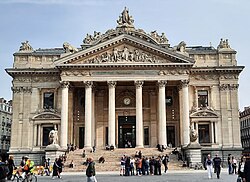
Photo by Paul Hermans / Wikimedia Commons / CC BY-SA 3.0 · Wikimedia Commons · CC BY-SA 3.0

6 min of listening · Section 1 of 5: Welcome to Saint Salvator's Cathedral

Prefer reading? The full guide is below

Here in person? Walk on with Mappu

This audio guide tells one place’s story. Walk Mode keeps going as you walk:

  • It knows where you are and talks about what’s in front of you, not only these chapters.
  • It takes you on to the next sight and follows what interests you.
  • Ask about anything you see, and it answers on the spot.
  • Your phone stays in your pocket.

A 2-hour live walk with Mappu, €4.99.

50 credits from the Starter pack. One-time purchase, no subscription.

Self-guided audio walk. No guide accompanies you. Not affiliated with the sites.

Keep exploring

Discover more places in Mappu.

St. Salvator's Cathedral • Section 1 of 5

St. Salvator's Cathedral: is there a free audio guide?

Quick answer. Yes. Mappu’s St. Salvator's Cathedral audio guide (Bruges, Belgium) is free in your browser: 5 sections and about 6 minutes of listening, in 6 languages. It covers “From Parish Church to Cathedral”, “A Building of Many Styles” and “Treasures Gathered Under One Roof”. In the Mappu app, Walk Mode narrates the places around you as you move and answers your follow-up questions.

St. Salvator's Cathedral map

Mappu's own map of the place, with the paths and entrances OpenStreetMap shows around it.

St. Salvator's Cathedral mapThe place on the map, with the guide's point marked.

St. Salvator's Cathedral: what does the audio guide cover?

  1. 01

    Welcome to Saint Salvator's Cathedral

    Welcome to Saint Salvator's Cathedral, the Roman Catholic cathedral of Bruges. You will find it in the historic center, on the square called Sint-Salvatorskerkhof, close to Steenstraat. The Dutch name is Sint-Salvatorskathedraal, and it is also known as the Cathedral of the Saviour and Saint Donatian. The name has a meaning worth knowing. The church is dedicated to the Verrezen Zaligmaker, which is Dutch for the risen Saviour. Its dedication also honors Saint Donatius. Here is the twist that makes this building so interesting. It was never designed to be a cathedral. For centuries it was simply a parish church, and the title only came in the nineteenth century. Over the next few minutes we will follow how an ordinary neighborhood church became the seat of a bishop. We will also look at the art that gathered inside its walls.

  2. 02

    From Parish Church to Cathedral

    Let us go back to the beginning. Since the tenth century, Saint Salvator's has been a common parish church. In those days Bruges had another great religious landmark, Saint Donatian's Cathedral. It stood at the very heart of the city, opposite the City Hall, and it was the central religious building of Bruges. Saint Salvator's grew in its own right. After a fire in 1116, construction of a new and larger church began in 1127, in the Romanesque style. The result is Bruges' oldest parish church, and its building work stretches from the twelfth to the fifteenth century. Then history turned. In 1834, shortly after Belgium became independent in 1830, a new bishop was installed in Bruges. The bishopric of Bruges was reconstituted, and the city's oldest parish church was given cathedral status. A humble parish church suddenly had to play a much grander role.

  3. 03

    A Building of Many Styles

    When the church became a cathedral in 1834, there was a problem. Its outside did not look like a cathedral. It was much smaller and less imposing than the nearby Church of Our Lady, and it had to be adapted to its new role. That is partly why the building tells such a layered story. You can read Romanesque, Gothic and Neo-Gothic elements in it, and each one marks a stage of construction, renovation or restoration. It is one of the few buildings in Bruges that has come through the centuries without being damaged, though it has certainly been changed and renovated along the way. As you look around, try to spot the different eras. The neo-Gothic stained glass windows belong to the later chapters. Inside the choir, the original sixteenth century podium can still be admired. Few places in Bruges let you see so many centuries side by side.

  4. 04

    Treasures Gathered Under One Roof

    Now step inside and look at the art. The cathedral is known for its late-baroque Brussels tapestries on the life of Christ. Alongside them you will find medieval tombs and a rich collection of Flemish paintings from the fourteenth to the eighteenth century. There is a story behind the sheer variety. Once the country was no longer under French rule, many art treasures from demolished churches, monasteries and convents ended up in Saint Salvator's. The cathedral became a kind of refuge for works that might otherwise have been scattered. That is part of why it feels like a museum of the city's religious past. Look for the rood loft with its organ, the bishops' tombs and the unique late Gothic choir stalls, all valued as historical works of art. The organ is also part of the cathedral's present. It is a venue for organ music concerts, so the building still sounds as well as looks the part.

  5. 05

    Before You Head Off

    As you leave, take a moment to look back at the building and remember its story. It has been a parish church since the tenth century, a Romanesque rebuilding in the twelfth, and a cathedral only since 1834. That makes it a church that grew into its title. Practicalities are simple. The cathedral sits in the historic center, and the nearest station is Bruges station. There is a bus stop named after the cathedral, and the Centrum-'t Zand car park is the nearest parking. While you wander, compare it with the Church of Our Lady nearby and ask yourself how a building once called less imposing than its neighbor became the spiritual heart of the city. Every tapestry, tomb and carved stall has its own story, and the cathedral rewards a slow second look.

About this guide

AI-generated from 6 sources; reviewed for accuracy and last updated on October 25, 2026. Verify tickets and opening hours on the official site.

Run a travel site or blog? Embed this audio guide for free.

Walk on from here

This place is stop 1 of 3 of a self-guided walk: Bruges Christmas markets. About 0.7 km and 10 minutes on foot, plus about 18 minutes of listening.

Route map: walking on from St. Salvator's Cathedral3 numbered stops in walking order. Stop 1: St. Salvator's Cathedral; Stop 2: Belfry of Bruges; Stop 3: Bruges City Hall.Stop 1: St. Salvator's Cathedral1Stop 2: Belfry of Bruges2Stop 3: Bruges City Hall3
Distances are estimates along the walking route, from OpenStreetMap.

Indicative route. While you walk, watch where you're going, mind the traffic and follow local signs and rules. The map is an aid, not a safety guide. Terms

  1. St. Salvator's CathedralThis guide

    about 0.5 km · about 7 min on foot

  2. Belfry of Bruges

    about 0.2 km · about 3 min on foot

  3. Bruges City Hall
Photo attribution

Walk Mode, in the free Mappu app: 2 hours for 50 credits (€4.99 Starter pack)

See the whole walk

More cathedrals with a free audio guide

Photo attribution

Plan your trip on a map and get an audio guide for almost any place nearby: just tap it on the Mappu map.

Common questions

St. Salvator's Cathedral: how long is the free audio guide?

About 6 minutes of listening in 5 sections: “Welcome to Saint Salvator's Cathedral”, “From Parish Church to Cathedral”, “A Building of Many Styles”, “Treasures Gathered Under One Roof”, and “Before You Head Off”.

St. Salvator's Cathedral: what can I ask Mappu after the guide?

You can ask follow-up questions such as “How did a parish church that dated back to the tenth century end up becoming the cathedral of Bruges?” and keep asking in Mappu, with the guide connected to your map and trip plan.