Takeshita Street Audio Guide

Harajuku's pedestrian street of fashion, food and youth culture

Takeshita Street
Photo by AsanagiWikimedia CommonsCC0

6 min of listening · Section 1 of 5: Welcome to Takeshita Street

Prefer reading? The full guide is below

Here in person? Walk on with Mappu

This audio guide tells one place’s story. Walk Mode keeps going as you walk:

  • It knows where you are and talks about what’s in front of you, not only these chapters.
  • It takes you on to the next sight and follows what interests you.
  • Ask about anything you see, and it answers on the spot.
  • Your phone stays in your pocket.

A 2-hour live walk with Mappu, €4.99.

50 credits from the Starter pack. One-time purchase, no subscription.

Self-guided audio walk. No guide accompanies you. Not affiliated with the sites.

Keep exploring

Discover more places in Mappu.

Takeshita Street • Section 1 of 5

Takeshita Street: is there a free audio guide?

Quick answer. Yes. Mappu’s Takeshita Street audio guide (Tokyo, Japan) is free in your browser: 5 sections and about 6 minutes of listening, in 8 languages. It covers “From Quiet Lane to Youth Landmark”, “The Look That Traveled the World” and “Snacks, Anime and Everything in Between”. In the Mappu app, Walk Mode narrates the places around you as you move and answers your follow-up questions.

Takeshita Street map

Mappu's own map of the place, with the paths and entrances OpenStreetMap shows around it.

Takeshita Street mapThe place on the map, with the guide's point marked.

Takeshita Street: what does the audio guide cover?

  1. 01

    Welcome to Takeshita Street

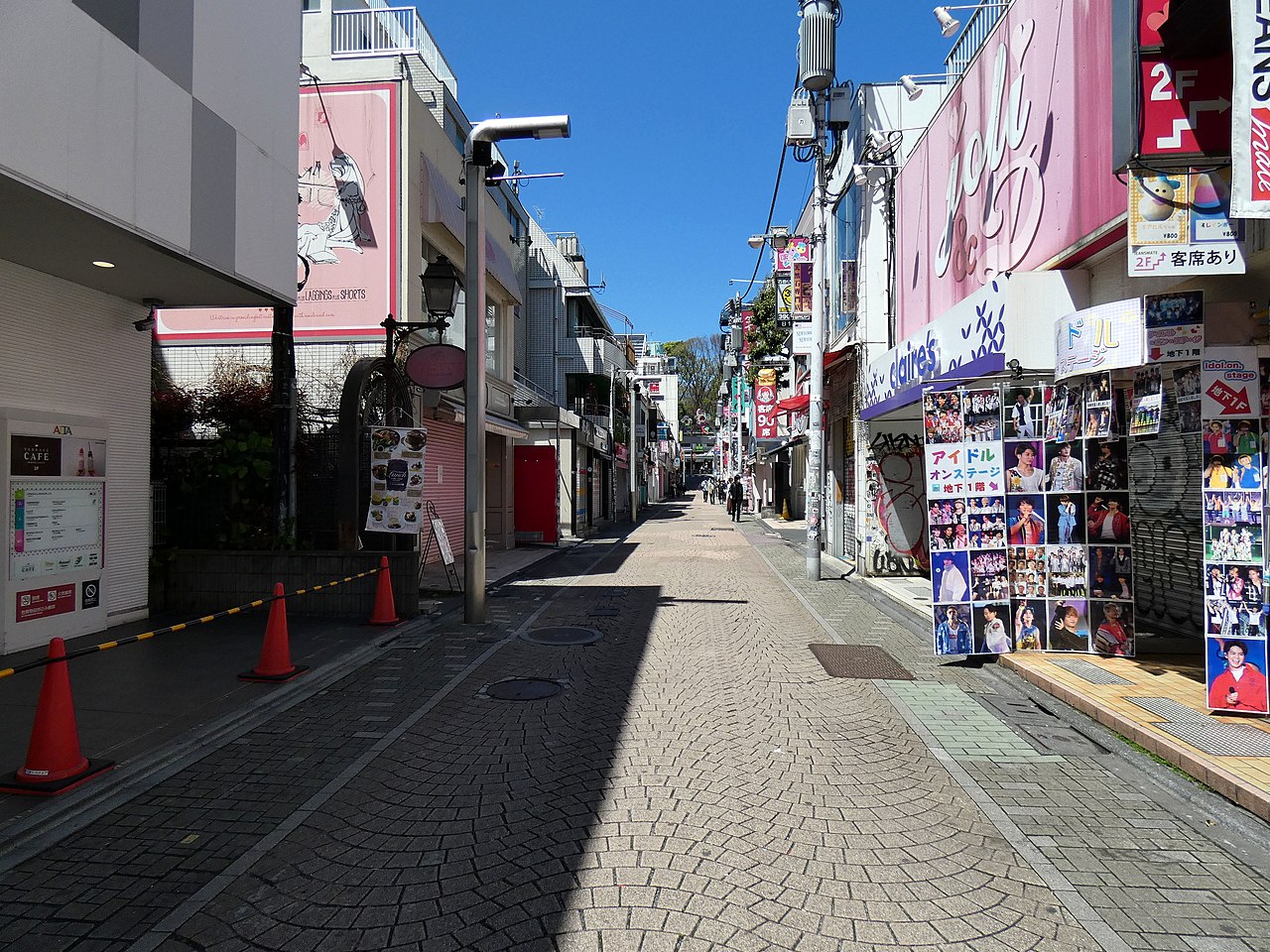
    Welcome to Takeshita Street, one of the most energetic few hundred steps in all of Tokyo. You are in the Harajuku district, on a pedestrian-only shopping street that runs from the entrance of Japan Railways Harajuku Station to Meiji-dori Avenue. It stretches roughly 350 meters, which sounds short until you try to cross it on a busy afternoon. Colorful banners and signs frame the entrance, and from there the lane fills with boutiques, quirky cafes, crepe and snack stalls, and shops selling things you may not have known you wanted. Over the next few minutes I will tell you how this lane grew from a modest street into a stage for youth culture, how magazines helped carry its style across Japan, and how to enjoy it today. Let's start walking.

  2. 02

    From Quiet Lane to Youth Landmark

    Takeshita Street did not begin as a fashion stage. Accounts of its early days differ in their dates. One tells of a small residential street established in the 1950s. Another describes a small street of traditional Japanese houses, placing that picture in the 1970s. What they agree on is the shape of the change: a quiet lane turned into a commercial hub. That transformation came in the 1970s and 1980s, when the youth and fashion movements centered on Harajuku began to draw national attention. Young people wanted places of their own, and this lane gave them one. Shops opened to meet their tastes, and the crowds followed. There is also a story of resilience in the telling. Tokyo was heavily damaged in the Second World War, and the area around Takeshita Street was rebuilt in the years afterward. Businesses gradually reopened, and the street found its energy again. In the post-war decades, young Japanese increasingly broke from traditional expectations and wanted more independence. Takeshita Street became one of the places where that new spirit could be seen, worn and shared.

  3. 03

    The Look That Traveled the World

    Look at the people around you, because they are part of the attraction. Since the 1980s, Takeshita Street has acted as a launchpad for new trends, especially those tied to the distinctive Harajuku style. It has long influenced street fashion well beyond Japan's borders. Media played a big part in spreading the word. Magazines such as FRUiTS, KERA and Zipper helped make the street's fashion scene known. Readers who saw those pages grew curious, and many came in person to experience the style firsthand. In a sense, the street worked like a live version of a magazine spread, with the readers walking right through it. The street also invites participation. Visitors are not only watching. By dressing, browsing and gathering here, they add to the street's identity. It remains a meeting place where young people come together to express themselves through fashion and style, and weekends are when that interplay is at its peak.

  4. 04

    Snacks, Anime and Everything in Between

    Now let's talk about what fills the shopfronts. Takeshita Street is lined with trendy fashion boutiques, quirky shops and a wide variety of food. You will find street food stalls, cafes, novelty treats, and even pet stores among the specialty shops. It is a place for people-watching as much as for shopping. Anime and pop culture are part of the mix too. Along the street you can find anime-themed merchandise, cosplay shops and themed cafes, with beloved characters shown in vivid storefront displays. The overall character is what Japan calls kawaii, a cute and playful charm. The street has also attracted visitors from abroad. In the mid-2000s, it drew Chinese tourists in large numbers, who came for Japanese souvenirs from bargain shops and local drugstores. And just a short walk away lies a very different Harajuku. Omotesando Street is the more grown-up shopping district, often called the Champs-Elysees of Tokyo. It has flagship stores such as Gucci and Louis Vuitton, along with Tokyu Plaza Omotesando Harajuku and the architecturally notable Omotesando Hills.

  5. 05

    Before You Head Off

    A few practical thoughts before you go. Takeshita Street is at its nicest early in the day, when you can stroll and browse in comfort. Later, and especially on weekends, it can be packed, and moving through the crowd takes patience. Families with small children will want to keep a close eye on them so nobody gets separated. Still, many visitors find the atmosphere lively rather than stressful, and it captures what makes Tokyo's youth culture so vivid. Try walking it in one direction and then back again. You will notice different shopfronts, different snacks and different outfits on the way back. Then consider stepping over to Omotesando and comparing the two moods, one playful and crowded, the other polished and spacious. What will you spot first: a magazine-worthy outfit, an anime character in a window, or a snack you cannot resist? The street has a way of surprising everyone who walks it.

About this guide

AI-generated from 6 sources; reviewed for accuracy and last updated on November 1, 2026. Verify tickets and opening hours on the official site. Independent guide by Mappu. Not affiliated with or endorsed by the site or its managers.

Run a travel site or blog? Embed this audio guide for free.

Walk on from here

The nearest places with a Mappu audio guide, in walking order: about 2.7 km and 35 minutes on foot in all.

Route map: walking on from Takeshita Street5 numbered stops in walking order. Stop 1: Takeshita Street; Stop 2: Togo-jinja Shrine; Stop 3: Cat Street; Stop 4: Yoyogi Park; Stop 5: Meiji Shrine.Stop 1: Takeshita Street1Stop 2: Togo-jinja Shrine2Stop 3: Cat Street3Stop 4: Yoyogi Park4Stop 5: Meiji Shrine5
Distances are estimates: the straight line between places plus 30%.

Indicative route. While you walk, watch where you're going, mind the traffic and follow local signs and rules. The map is an aid, not a safety guide. Terms

  1. Takeshita StreetThis guide

    about 0.2 km · about 2 min on foot

  2. Togo-jinja Shrine

    about 0.8 km · about 11 min on foot

  3. Cat Street

    about 1.3 km · about 17 min on foot

  4. Yoyogi Park

    about 0.5 km · about 6 min on foot

  5. Meiji Shrine
Photo attribution

Walk Mode, in the free Mappu app: 2 hours for 50 credits (€4.99 Starter pack)

Planning a trip to Tokyo?

Get your plan

Mappu sketches your days free in the chat, no account needed. Then take the full plan with you:

  • Weekend trip, €9.99: Your day-by-day plan plus 2 live walks
  • Save your trip’s free guides on your phone in the Mappu app: they play with no signal
See the trip packs

Already going? The 2-hour live walk in Tokyo is €4.99

Plan your trip

Photo attribution
  • Tokyo 3-Day Itinerary: Alex
  • Japan First Trip 10-Day Itinerary: Stefan K

Plan your trip on a map and get an audio guide for almost any place nearby: just tap it on the Mappu map.

Common questions

Takeshita Street: how long is the free audio guide?

About 6 minutes of listening in 5 sections: “Welcome to Takeshita Street”, “From Quiet Lane to Youth Landmark”, “The Look That Traveled the World”, “Snacks, Anime and Everything in Between”, and “Before You Head Off”.

Takeshita Street: what can I ask Mappu after the guide?

You can ask follow-up questions such as “How is the street laid out between Harajuku Station and Meiji-dori Avenue, and what is the best way to enter and leave it?” and keep asking in Mappu, with the guide connected to your map and trip plan.
