
Molo Audace: how long is the free audio guide?
About 6 minutes of listening in 5 sections: “Welcome to Molo Audace”, “A Pier Built on a Wreck”, “The Destroyer Audace and a New Name”, “The Compass Rose and the Pier Today”, and “Before You Head Off”.
A pier built on a shipwreck, walking out over the Gulf of Trieste
Quick answer. Yes. Mappu’s Molo Audace audio guide (Trieste, Italy) is free in your browser: 5 sections and about 6 minutes of listening, in 6 languages. It covers “A Pier Built on a Wreck”, “The Destroyer Audace and a New Name” and “The Compass Rose and the Pier Today”. In the Mappu app, Walk Mode narrates the places around you as you move and answers your follow-up questions.
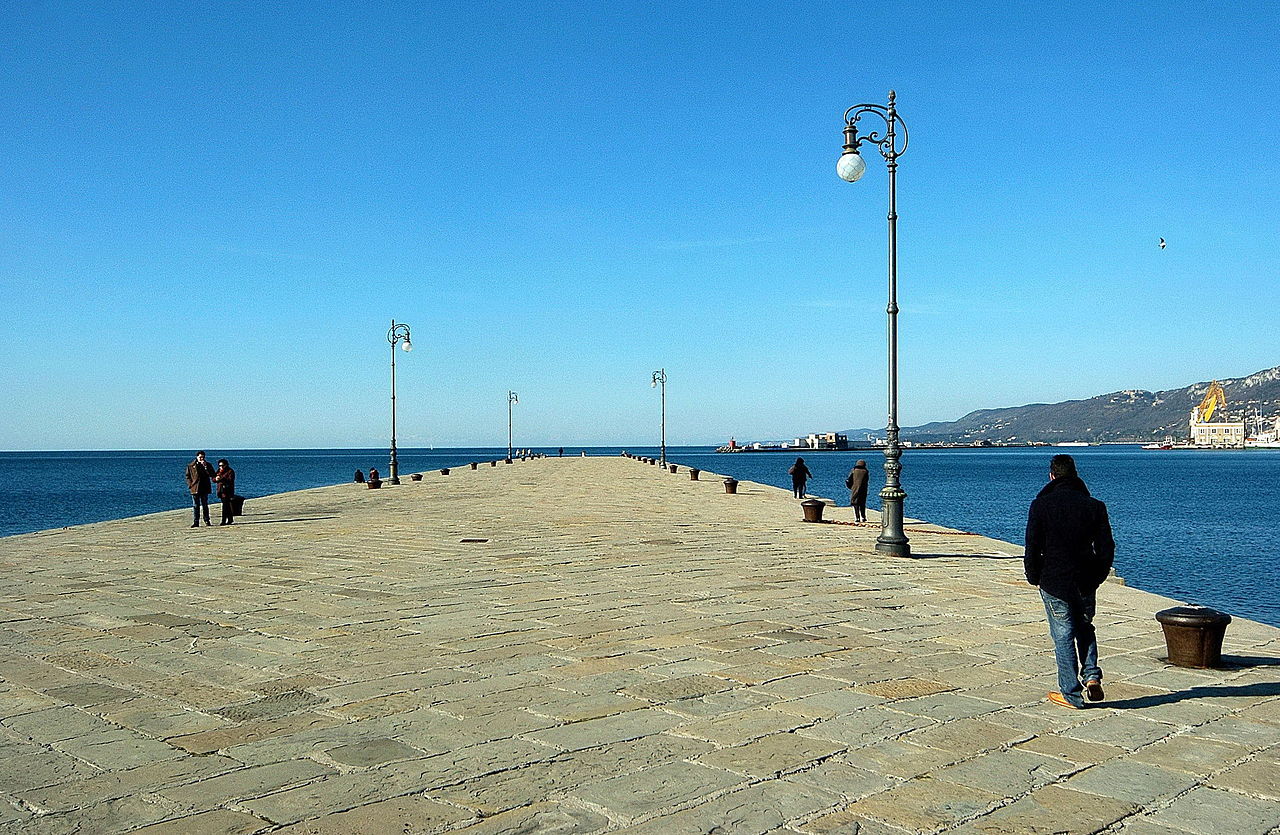
Welcome to Molo Audace, one of the most recognizable spots in Trieste. You are standing on a long stone pier that reaches out into the Gulf, right in front of Piazza Unità d'Italia, the city's main square. The Grand Canal is only a few steps away. Local tourism writers like to call the pier a walkway suspended over the water, and that is a good way to picture it. A quick note on what this guide covers. The sources I have are strong on the pier's origins, its name and its role in the city. They say much less about small day-to-day details, so I will stick to what is documented. In the next few minutes we will look at the pier's beginnings on a sunken ship, the day in 1918 that gave it its name, and how it is used today. One geographic detail first. The pier divides two basins of the Old Port: the San Giorgio basin on one side and the San Giusto basin on the other. So as you walk out, you are literally standing on the line between two pieces of Trieste's harbor.
Before it was called Molo Audace, this pier was the Molo San Carlo. According to the Trieste tourism board, it was built between 1743 and 1751 on the wreck of a ship called the San Carlo, which had sunk in the harbor. Wikipedia's account of the sinking dates it to 1740. So the stone beneath your feet began as a practical answer to a very maritime problem, and the ship gave the pier its first name. That was the age of Maria Theresa of Austria, when Trieste belonged to the Habsburg Empire. The pier was small by today's standards. It started out 95 meters long and was connected to the land by a small wooden bridge. Over time it was lengthened, and it now measures 246 meters, so the pier you are walking is more than two and a half times its original length. In those early centuries this was a working waterfront. Passenger ships and merchant ships tied up at the San Carlo pier, and a busy flow of goods, merchants and travelers arrived in Trieste from all over the world. Today it is a place for strolling, but the pier started life as a gateway for trade.
The name you see on the map comes from a single day. On the third of November, 1918, at the end of the First World War, the destroyer Audace entered the port of Trieste and docked at the San Carlo pier. It was the first ship of the Italian Royal Navy to arrive in the city. Local sources treat it as a defining moment in Trieste's story. To remember that arrival, the pier was renamed in March 1922. San Carlo became Molo Audace, and the name stuck. Audace is the Italian word for bold, so the pier is, quite literally, the Bold Pier. The ship itself left a souvenir that you can still find in the city. Its anchor is on display at the base of the Victory lighthouse. If you ever head to that part of Trieste, look for it. It is a physical link between the pier you are standing on and the ship that gave it its name.
Walk to the far end of the pier and you will find a bronze compass rose. According to Wikipedia, it was erected in 1925 and set on a white stone column. It carries an inscription at its center commemorating the landing of the Audace. It replaced an earlier compass rose made entirely of stone. It is a fitting marker at the tip of a pier named after a ship, because it points you to every direction of the Gulf. The pier's job has changed a great deal. As maritime traffic moved to other parts of the port, Molo Audace gradually lost its commercial function. Today it is a place for walking and quiet contemplation, loved by locals and visitors alike for its panoramic view over the Gulf and the city. Boats now tie up here only occasionally, with one big exception. During the Barcolana, the historic annual international sailing regatta, the boats dock here in a triple row. If you ever find the pier crowded with masts, that is probably why.
Before you leave the pier, turn around and look back toward the city. From here you can see Piazza Unità d'Italia, which opens toward the Gulf. On the sea side of the square stand two tall flagpoles, each 25 meters high and topped with a halberd, the symbol of Trieste. The tourism board notes that the square is lit by dozens of white and blue lights at night, and it seems to be a different place after dark. Here is something to notice as you stroll back. A pier that began on a sunken ship, carried passengers and merchants, welcomed a destroyer and now hosts walkers, all within one narrow strip of stone. See if you can feel those layers as you walk. And if you want to keep exploring, the Victory lighthouse and the anchor at its base are the next thread to pull. The story of Trieste's waterfront does not end at the water's edge.
AI-generated from 6 sources; checked automatically and last updated on October 19, 2026. Verify tickets and opening hours on the official site.
This place is stop 2 of 7 of a self-guided walk: Piazza Unità to San Giusto, Trieste. About 2.4 km and 35 minutes on foot, plus about 44 minutes of listening.
 Piazza Unità d'Italia
about 0.3 km · about 4 min on foot

Molo AudaceThis guide
about 0.6 km · about 7 min on foot
 Canal Grande
about 0.5 km · about 7 min on foot
 Roman Theatre
about 0.4 km · about 5 min on foot
 Arco di Riccardo
about 0.4 km · about 5 min on foot
 San Giusto Cathedral
about 0.3 km · about 4 min on foot
 San Giusto Castle
Live Walk Mode: 2 hours for 50 credits (€4.99 Starter pack)
Piazza Unità d'ItaliaTriesteCanal GrandeTriesteArco di RiccardoTriesteRoman TheatreTriesteSan Giusto CastleTriesteSan Giusto CathedralTriestePlan your trip on a map and get an audio guide for almost any place nearby: just tap it on the Mappu map.
About 6 minutes of listening in 5 sections: “Welcome to Molo Audace”, “A Pier Built on a Wreck”, “The Destroyer Audace and a New Name”, “The Compass Rose and the Pier Today”, and “Before You Head Off”.
Before it was called Molo Audace, this pier was the Molo San Carlo. According to the Trieste tourism board, it was built between 1743 and 1751 on the wreck of a ship called the San Carlo, which had sunk in the harbor. Wikipedia's account of the sinking dates it to 1740. So the stone beneath your feet began as a practical answer to a very maritime problem, and the ship gave the pier its first name.
You can ask follow-up questions such as “How did a sunken ship end up becoming the foundation of Trieste's most famous pier?” and keep asking in Mappu, with the guide connected to your map and trip plan.